
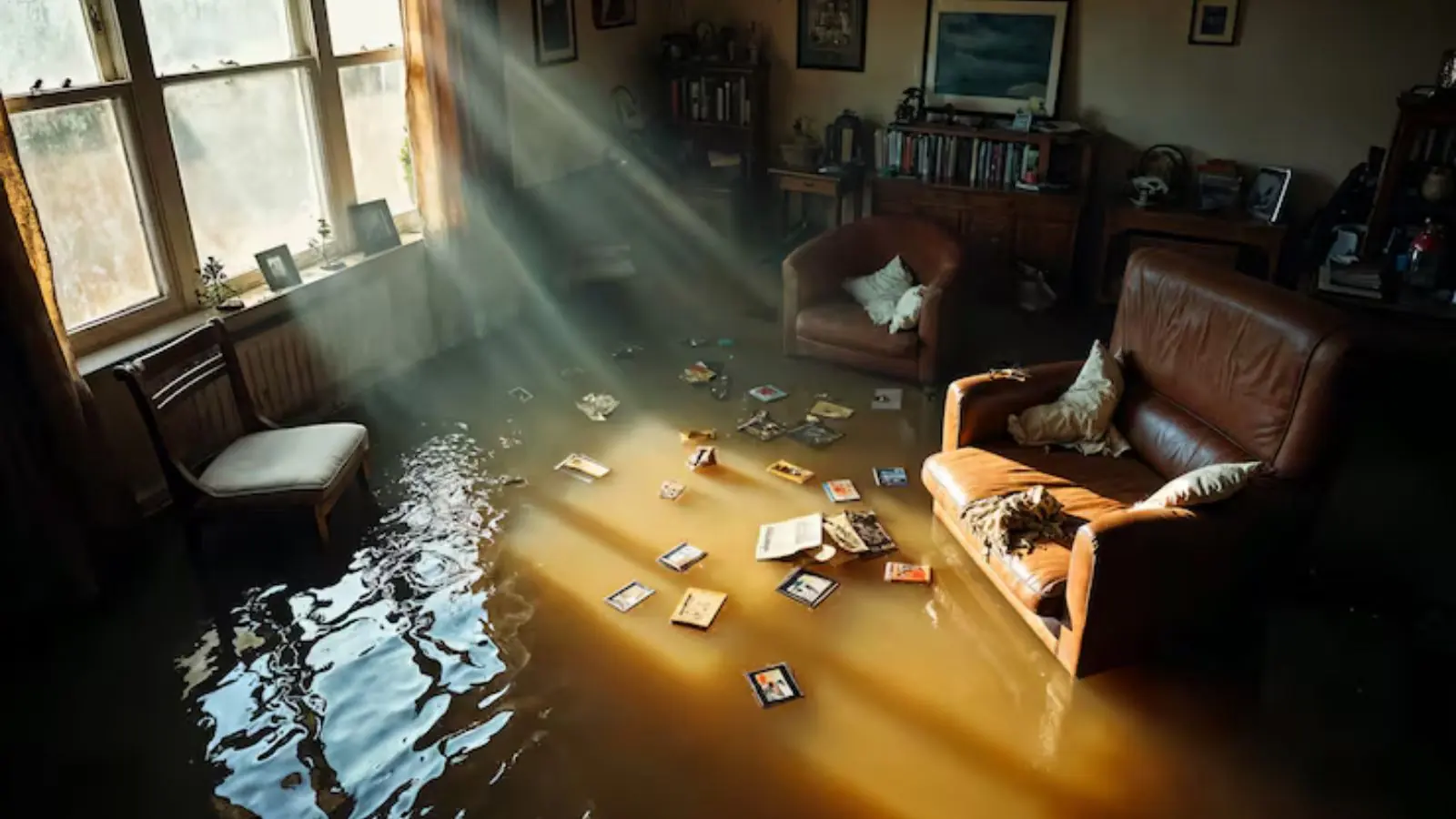
Does insurance cover water damage? Often yes, when the water arrives suddenly and by accident. Often no, when it seeped in slowly for months or rose from outside as flood. Your policy wording decides, so the first job is working out which kind of water you have.
This guide sorts the common cases for Chatsworth homeowners and renters. It also lists what the California Department of Insurance tells policyholders to do right away. It is general information, not a coverage opinion, so check your policy and ask your insurer about your own loss.
Sudden and accidental versus gradual damage
Most homeowners policies are written around sudden and accidental events. A supply line that bursts overnight or a water heater that fails on a Sunday fits that idea. A drip under the sink that went unnoticed for a season usually does not.
The table below shows how these situations are often treated. It is a pattern, not a promise, because every policy words its exclusions differently.
| What happened | Often treated as | Your next move |
|---|---|---|
| Supply line burst overnight | Sudden and accidental, often covered | Stop the water, document, call your insurer |
| Water heater failed | Sudden and accidental, often covered | Shut off supply, photograph, report |
| Slow leak behind a wall for months | Gradual, often excluded | Report anyway and ask what your policy says |
| Rain entering through a damaged roof | Depends on policy wording | Tarp if safe, keep receipts, ask your insurer |
| Water rising from outside the home | Flood, usually excluded | Check whether you hold separate flood coverage |
Not sure which row fits? Report the loss and let the adjuster classify it. Do not guess in your own favor or against it.
Flood is a separate policy
The California Department of Insurance states that homeowners policies do not cover flood damage. Flood insurance is a separate policy. Many people discover this only after a storm, when it is too late to buy.
Whether your address sits in a mapped flood zone is a question for the FEMA flood map, not for guesswork. Look up your street, then ask your insurer or agent what you carry today. If you need help after storm water has already entered the building, the flood damage restoration page explains how crews handle the cleanup.
- Check your declarations page for the words flood or surface water.
- Ask whether sewer or drain backup is a separate add-on on your policy.
- Look up your address on the FEMA flood map and save a screenshot.
- Ask when any new coverage would begin, since waiting periods can apply.
Does Insurance Cover Water Damage in Chatsworth? Call the 24/7 line.
☎ (818) 337-2642The duty to take reasonable steps
Policies may not cover ensuing damage if you did not take reasonable steps to secure the property. In plain terms, if a pipe breaks and the carpet sits wet for a week, the second wave of harm may be argued as your responsibility. The sooner water is controlled, the stronger your position.
The California Department of Insurance also says your insurer will reimburse reasonable costs to protect your property. That is why emergency drying and extraction matter. Fast water mitigation limits the spread into walls and subfloors, and the invoice becomes part of your record.
- Shut off the water at the main valve or the fixture valve.
- Move small furniture and valuables to dry rooms.
- Run air circulation and a dehumidifier if the area is safe.
- Keep every receipt for temporary repairs and equipment.
What to do in the first hours
The department's guide gives a clear order of operations. Follow it in sequence and you will have most of what an adjuster asks for later.
- Report the damage to your insurer immediately.
- Make temporary repairs to prevent more harm and keep receipts.
- Photograph and video every wet area before anything is moved.
- Start a log of calls with dates, names and what was said.
- Keep damaged items until the adjuster says discarding is acceptable.
- Hold off on extensive permanent repairs until the adjuster has assessed the loss.
Safety first. If water is near outlets, panels or appliances, stay out of the room. Cut power only if the panel is dry and safe to reach. For electrical or gas danger, call 911 or the utility before calling a restoration company. Sewage water means stay out as well.
Documenting the loss so the claim holds together
Good records speed up every conversation. List damaged belongings with brand and model, and copy all correspondence with your insurer. A simple folder on your phone works as well as a paper one.
For structural damage, the department advises getting written, line by line bids from licensed contractors. Compare scope, not just totals. A bid that skips drying equipment or containment may look cheaper and still leave you with a second problem.
- Photos taken before cleanup, then again during drying.
- Item list with brand, model and approximate age.
- Written bids that separate drying, demolition and rebuild.
- Copies of emails, letters and the claim number.
Code upgrades, denials and mold
If repairs trigger building code upgrades, those usually need ordinance or law coverage on the policy. Ask your insurer whether you have it before the rebuild is planned. Finding out afterward is a hard way to learn.
If a claim is denied, the denial must be in writing, give specific reasons and mention that the Department of Insurance can review it. Read it closely and keep it with your log.
Mold adds one more wrinkle. After sudden water damage, the department says to dry wet areas promptly with air circulation and dehumidification to limit mold. If leakage happened over time, mold may already be present, so contact the adjuster and arrange professional testing and cleanup. Our water mitigation service starts with moisture mapping for that reason.
Chatsworth storm water is not a burst pipe
The Chatsworth Dam and Reservoir were built in 1918 as part of the Los Angeles Aqueduct system and are owned by LADWP. The reservoir was taken out of service in 1969 over water quality concerns tied to algae and storm inflow.
That history is a useful reminder that storm water and plumbing water are different things, and insurers treat them differently. If rain is your concern, check the FEMA flood map for your address and ask your insurer what is covered. Doing the lookup now costs little.
Rain here falls mostly from November through March, while summers are nearly dry. That makes autumn a sensible time to read your policy, look at the roof and confirm whether flood or drain backup coverage exists. Doing it before the first storm beats doing it with water on the floor.
Crews also serve nearby areas such as Canoga Park and Winnetka. The same claim steps apply there, so share this checklist with neighbors.
Frequently asked questions
Does homeowners insurance cover a burst pipe?
Sudden and accidental pipe failures are often covered, but your policy wording controls. Report the loss right away, stop the water, and make temporary repairs. The California Department of Insurance says insurers reimburse reasonable costs to protect property, so keep receipts. Ask your insurer how your policy treats the pipe itself versus the resulting damage.
Is flood damage covered by my homeowners policy?
Usually not. The California Department of Insurance states that homeowners policies do not cover flood and that flood insurance is a separate policy. Check your declarations page and ask your insurer or agent what you hold. The FEMA flood map can show how your address is mapped.
Should I start repairs before the adjuster visits?
Take emergency steps that stop further damage, and keep receipts. Avoid extensive permanent repairs until the adjuster has assessed the damage. Photograph everything first and keep damaged items until the adjuster says discarding is acceptable.
What if my claim is denied?
A denial must be in writing with specific reasons, and it should mention that the California Department of Insurance can review it. Keep your call log and records together. You can ask your insurer to explain the wording, and you can contact the department for review options.
Does living near the old Chatsworth Reservoir change my coverage?
Nothing in the reservoir's history sets your coverage. The reservoir is out of service, and your policy and your mapped flood status decide what is covered. Look up your address on the FEMA flood map and ask your insurer whether flood and drain backup coverage are on your policy.
Water on the floor right now? Call the 24/7 line.
☎ (818) 337-2642