
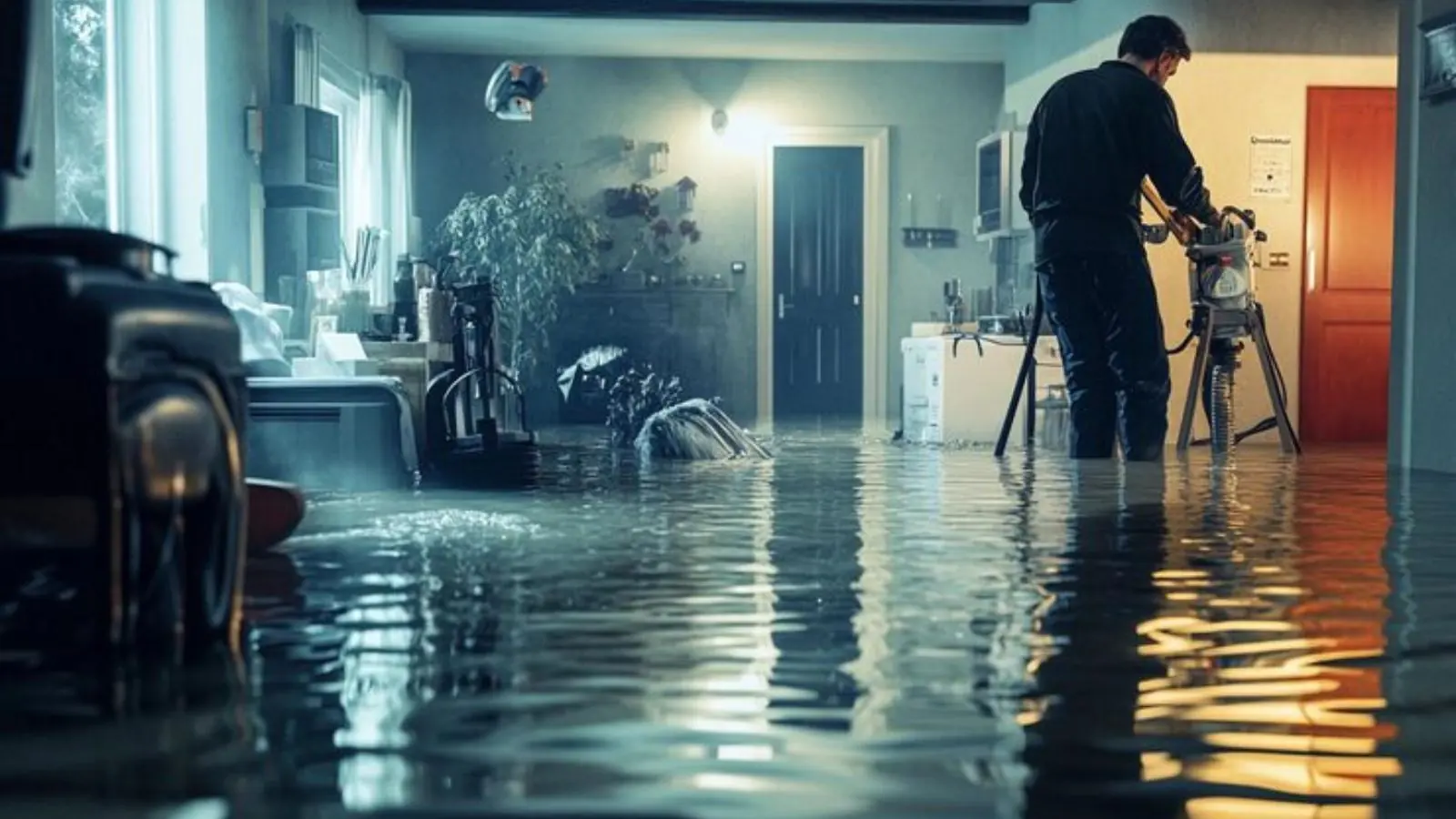
Water is moving through your home right now, and every hour it sits, more of the structure soaks it up. Our crews dispatch 24/7, so you can call at any hour about emergency water mitigation in Chatsworth, CA. While you wait, close the main water valve, keep people and pets off wet floors, and lift rugs, electronics and paper off the ground. If water is near outlets or the panel, stay back.
Water mitigation is the work of stopping water damage from spreading and starting to dry the building before materials fail. It covers finding the source, pulling out standing water, mapping moisture, and setting up drying equipment. Rebuilding is a separate job that comes after the structure is dry.
Wet wall, damp carpet, musty smell: what do you call that job?
Most people do not search for the trade name. They type water coming through the wall, carpet that will not dry, or a sour smell in a closet. Those are the symptoms, and the work that answers them is called water mitigation.
A damp baseboard or a soft patch of drywall usually means water has traveled further than you can see. Crews use moisture meters and thermal imaging cameras to trace where it went, then dry those spots instead of guessing.
- Paint bubbling or drywall that feels soft near the floor
- Carpet that squishes underfoot or feels cool to the touch
- A musty smell in a room that was dry last week
- Ceiling stains that grow after a rain
The first 72 hours, step by step
Day one matters most. After that, drywall paper swells, wood floors cup, and moisture sits where mold can start.
- Stop the source. Close the main valve or isolate the fixture, and block or tarp any rain entry.
- Make the area safe. Cut power to wet circuits only if the panel is dry and you can reach it without stepping in water.
- Document the loss with photos, and list damaged items with brand and model for your insurer.
- Extract standing water with pumps and extraction units, then lift soaked carpet padding.
- Map the moisture with meters and a thermal imaging camera, and mark every wet zone.
- Set air movers and LGR dehumidifiers, and recheck readings each visit until materials match a dry reference.
Emergency Water Mitigation in Chatsworth? Call the 24/7 line.
☎ (818) 337-2642Structural drying: getting water out of walls, subfloors and framing
Structural drying means removing moisture that has soaked into the building itself, not just the carpet or the air. Drywall, plywood subfloor, wall studs and concrete slabs each hold water differently. A technician reads every one with a moisture meter and compares it to a dry reading taken from an unaffected part of your home.
Air movers push dry air across wet surfaces so the water evaporates. LGR dehumidifiers pull that vapor out of the room so it does not settle back into the walls. Run only one of the two and the room can feel dry while the framing stays wet.
Sometimes drying has to happen inside the wall. Small holes or a removed strip of baseboard let air reach the cavity, and insulation that has soaked up water is usually taken out because it holds moisture against the studs.
Drying is finished when readings match your dry reference, not when a surface feels dry to the hand. ANSI/IICRC S500 is the published standard for this, and you can ask any company whether its crews work to it.
When water mitigation is an emergency
Treat it as urgent if water is still flowing, has reached more than one room, or is dripping from a ceiling or light fixture. Treat it as urgent too if it came up from a toilet or drain. Call and describe what you see, because same-day response when available is the goal, and after-hours calls reach the same dispatch as daytime ones.
Safety first. If water is dripping from a light fixture or touching outlets, stay out of that room. Cut power only if the panel is dry and safe to reach, and call 911 or the utility for any electrical or gas risk before you call the restoration line.
What a Chatsworth rain season does to a house
Rain here falls mostly from November through March, and summers are nearly dry. Small roof, window and slab flaws hide for months, then show up as a wet corner after the first real storm. Look over ceilings and window frames in October, and test that your main shutoff valve turns. If it will not close, call LADWP, the water utility.
Water category and what it means for the job
| Water category | What it usually means | What mitigation does |
|---|---|---|
| Category 1 | Clean source such as a supply line or faucet | Extract, dry in place, keep porous materials if they dry fast |
| Category 2 | Gray water from a washer, dishwasher or clean water that has aged | Extract, clean surfaces, remove padding, dry the structure |
| Category 3 | Sewage, storm flooding or long-standing water | Protective gear, remove porous materials, apply antimicrobial treatment |
Dry in place or tear out: the honest trade-offs
Drying in place saves materials and cost when the water was clean and caught early. Removing drywall or flooring costs more up front, but it can head off a bigger rebuild later. Hardwood is the hardest call, since drying mats sometimes pull the moisture out and sometimes the planks have cupped past saving. A moisture reading should settle it, not a guess.
What affects the cost of water mitigation
A real number comes only after someone looks at the damage. Call, describe what happened, and the dispatcher will tell you what to expect next.
- The size of the affected area and how many rooms are wet
- The water category, since contaminated water adds protective steps
- The materials involved, because hardwood, plaster and concrete dry slowly
- How long the water sat before drying began
- How much equipment is needed and for how many days
Insurance and your claim
Sudden and accidental water damage is often covered, while gradual leaks and neglect often are not. Flood is usually excluded and needs its own policy, so check your policy or ask your insurer. The California Department of Insurance advises making temporary repairs, keeping receipts, and photographing everything before you throw anything away. It also says prompt drying limits mold, and our mold remediation page covers what happens if a musty smell is already there.
Chatsworth's hills and where your rain goes
Chatsworth sits at 978 feet, with the Santa Susana Mountains to the north and the Simi Hills to the west and north. Homes near those slopes can see runoff head toward the foundation in heavy rain. Check where your downspouts empty and keep yard drains clear. Neighbors in Northridge and Porter Ranch get the same dispatch.
Frequently asked questions
What is the difference between water mitigation and water damage restoration?
Mitigation is the first phase. It stops the source, removes standing water and dries the structure so damage does not grow. Restoration is the broader process that also includes cleaning and rebuilding, which you can read about on the water damage repair page.
My carpet feels damp and the room smells musty. Who do I call?
That combination points to hidden moisture, and the service you want is water mitigation. A technician checks the carpet, padding, baseboards and wall bottoms with a moisture meter to see how far it goes. If the source is still active, shut off the supply first and then call.
Do you handle water mitigation emergencies at night or on weekends in Chatsworth?
Yes. Dispatch runs around the clock, including nights, weekends and holidays. Same-day response is offered when available, but the dispatcher cannot promise a specific arrival time because it depends on crew location and traffic. Call, explain what is happening, and follow the safety steps on this page while you wait.
How long does structural drying take?
Usually a few days, though it depends on the materials, the amount of water and the humidity in the house. Dense materials like concrete or hardwood take longer than drywall. The crew checks readings on return visits and stops only when materials match the dry reference.
Can fast mitigation promise that mold will not grow?
No one can promise that. Prompt drying removes the moisture mold needs, which lowers the chance, but it does not make it impossible. If mold does appear, testing and cleanup follow ANSI/IICRC S520, and health questions belong to a physician.
Water on the floor right now? Call the 24/7 line.
☎ (818) 337-2642