
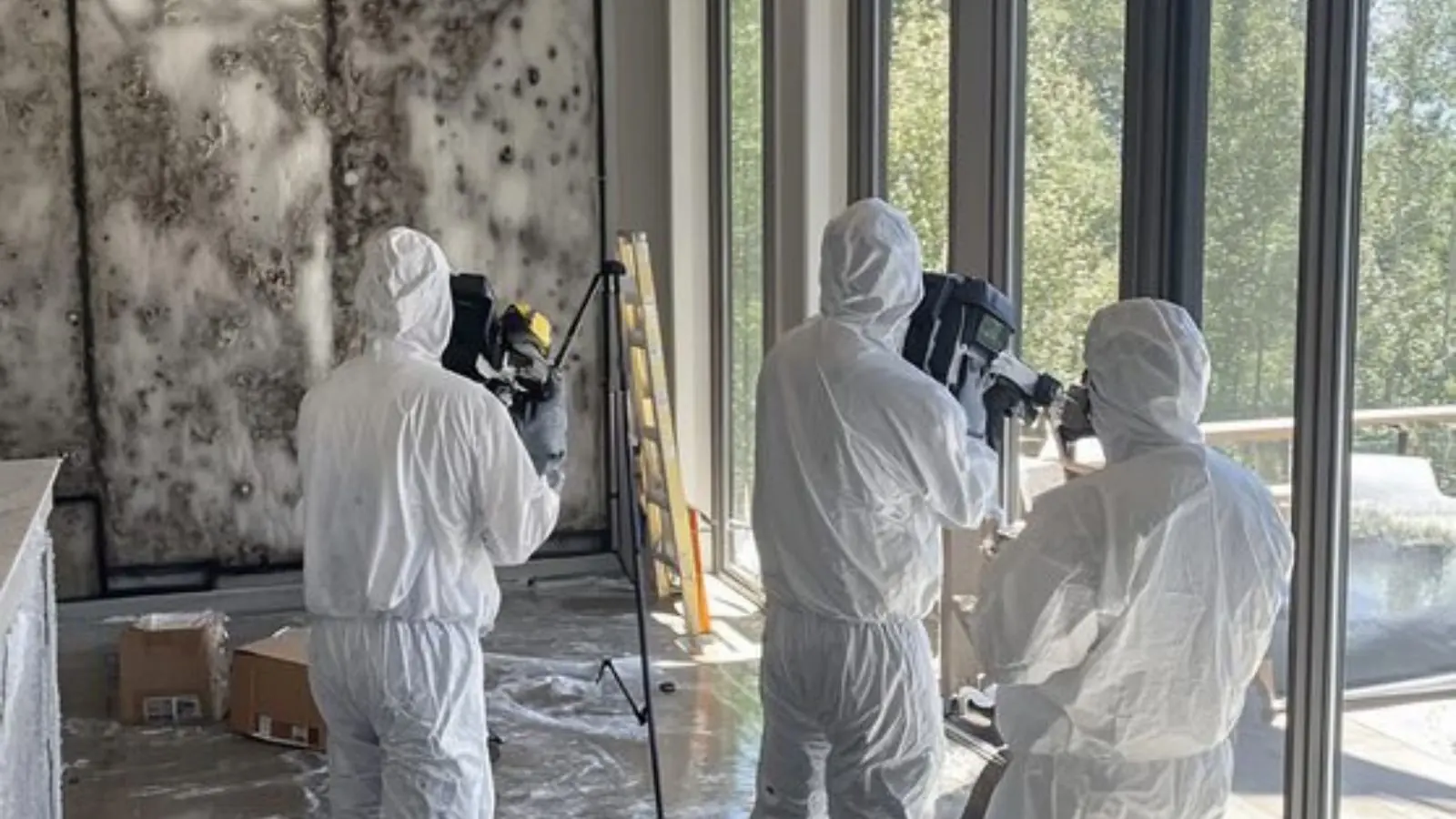
You found a dark patch on a wall, or a smell that never leaves a closet, and you want to know what to do about it. Mold remediation in Chatsworth, CA is the work of containing mold growth, removing what cannot be cleaned, cleaning what can, and correcting the moisture behind it. Industry practice follows ANSI/IICRC S520, a published standard you can ask any company about.
Mold needs moisture to grow, so the plan always has two halves. One is dealing with the growth that is there. The other is finding and drying the wet source, which is where water mitigation comes in.
Musty smell, dark spots, peeling paint: which service is that?
People rarely search for the trade term. They type fuzzy spots on the ceiling, bathroom grout that keeps turning dark, or a closet that smells like wet cardboard. When those signs point to mold growth, the service is mold remediation.
Looks alone cannot tell you what a spot is. Dirt, soot, mildew stains and mold can look alike, and only a qualified tester using sampling can say what is present. Questions about health belong to a physician, not a restoration company.
- Dark, fuzzy or speckled patches on drywall, ceilings or baseboards
- Paint that bubbles or peels in a bathroom or near a window
- A damp or earthy odor that returns after cleaning
- Visible moisture, condensation or a past leak in the same spot
Mold removal and black mold cleanup
Black mold is a common name for dark-colored growth, and color does not tell a technician how to handle it. Under S520, the approach depends on how much area is affected and what material it sits on. A dark patch and a lighter patch get the same careful process.
The crew first seals the work area with plastic sheeting and sets up negative air with HEPA air scrubbers, so spores disturbed during the work are drawn out and filtered. Porous materials with growth, such as drywall, insulation and carpet padding, are cut out and bagged. Solid surfaces like framing are HEPA vacuumed, wiped and treated.
After cleaning, the area is checked with a moisture meter and visually inspected, and clearance testing may be arranged by an independent party. Nobody can promise that mold will not return, because that depends on whether moisture comes back. Fixing the leak, the vent or the humidity problem is what actually reduces the odds.
Mold Remediation in Chatsworth? Call the 24/7 line.
☎ (818) 337-2642Mold after water damage
Mold after a leak or flood is common because wet drywall, carpet and wood hold the moisture mold needs. Drying materials fast, with air circulation and dehumidification, is the best way to limit it. See water mitigation for how that drying is done.
If the water was sudden, prompt drying may stop growth before it starts. If a leak ran over time, mold may already be present inside the wall. The state insurance guide says mold may already be present when leakage happened over time, and it advises calling your adjuster and arranging professional testing and cleanup.
When a wall has been wet for a while, a technician looks for the pattern. Moisture meters and thermal imaging cameras show where water traveled, and a small opening in the drywall may reveal what is behind. The finding decides whether a spot clean is enough or whether sections need to come out.
Once the material is removed and the structure is dry, rebuilding comes next. The water damage repair page covers that stage.
Which response fits which situation
| Situation | Typical response | Trade-off |
|---|---|---|
| Small surface spot on a hard, sealed surface | Clean and dry the area, then fix the moisture source | Quick, but a spot can mask more behind it |
| Growth on drywall or ceiling after a leak | Containment, cut out affected board, HEPA clean framing | More disruption, cleaner result |
| Musty odor with no visible mold | Moisture mapping, then testing if needed | Testing adds a step but replaces guessing |
| Growth tied to HVAC or ductwork | Specialized inspection of the system and affected areas | Larger scope, depends on access |
Test first, or just remove it?
Testing can show what is present and where, which helps if an insurer or a landlord is involved. It also costs time. If growth is obvious and the cause is known, some owners go straight to remediation and skip sampling, while others want a written baseline first. Ask the company what it recommends and why, and ask whether an independent party handles testing.
What affects the cost of mold remediation
No honest number exists before someone sees the area. Call to describe what you found, and the team will explain how an inspection works.
- The size of the affected area and how many rooms are involved
- The materials hit, since drywall and insulation are cheaper to remove than framing is to clean
- How much containment and air scrubbing the setup needs
- Whether testing or clearance sampling is included
- Rebuilding afterward, which is a separate scope
Insurance notes for mold
Coverage for mold depends on the cause. A one-time accidental leak is often treated differently from long-term seepage or neglect, so check your policy and ask your insurer. Policies may not cover ensuing damage if reasonable steps were not taken to secure the property, so dry out and document early.
Rainy-season checks in older tract homes
Rain here falls mostly from November through March, while summers are nearly dry. That makes spring a good time to check attics, window frames and bathroom ceilings for new stains. Northridge saw postwar tract housing built for veterans' families, so many homes there are older, and exhaust fans and caulk age too. See the Northridge page for the area.
Frequently asked questions
I see dark spots on my ceiling. Is that mold?
It could be, but a restoration company cannot diagnose it by sight alone, and neither can you. Dust, soot and old water stains look similar. Sampling by a qualified tester can tell what is present. In the meantime, find out whether there is a leak above the spot.
My house smells musty but I cannot see anything. What causes that?
A musty odor points to moisture somewhere, such as behind drywall, under flooring or in a crawl space. A technician with a moisture meter and thermal imaging camera can locate it. Whether mold is the cause is a separate question that testing answers.
What does ANSI/IICRC S520 cover?
It is the published industry standard for professional mold remediation, covering assessment, containment, removal, cleaning and verification. You can ask any company whether its crews work to it.
Will mold come back after remediation?
No one can promise it will not. Mold returns when moisture does. Remediation removes the growth, and the lasting fix is correcting the cause, whether that is a leak, a vent that dumps into the attic, or high humidity.
Can I clean mold myself?
Small hard-surface spots are a homeowner job, using household cleaning and good ventilation. Larger areas, porous materials, or growth after a leak call for containment and HEPA equipment. For symptoms or health worries, talk to a physician.
Does homeowners insurance cover mold?
It depends on the policy and on what caused the moisture. Sudden and accidental water damage is often covered, and gradual leaks often are not. Ask your insurer, and see water damage cleanup for what to document.
Water on the floor right now? Call the 24/7 line.
☎ (818) 337-2642