
Once the drying equipment is gone, the house still looks like water visited it. Water damage repair in Chatsworth, CA is the rebuilding stage, where the walls, floors and finishes removed or ruined during the loss are put back. A good repair plan starts with dry readings, a clear scope of work, and a realistic order of trades.
Water damage repair means replacing and refinishing building materials that water damaged beyond saving, after the structure has been dried and checked. It is different from water mitigation, which stops and dries the damage, and from water damage cleanup, which clears out the debris.
When repairs can safely begin
Closing up a wall that is still damp is how a small loss turns into a bigger one. Rebuilding should wait until moisture meters show framing, subfloor and drywall at or near your dry reference. Ask for those readings in writing, and ask whether any area was checked for hidden moisture with a thermal imaging camera.
If the damage came from a slow leak, mold may already be present behind the finishes. The California Department of Insurance suggests contacting your adjuster and arranging professional testing and cleanup in that case. Rebuild over mold and it just gets sealed in.
The repair sequence, trade by trade
Repairs go in a set order so one trade does not ruin another's work. Each stage waits for the one before it to finish and dry.
| Phase | What happens | What to watch for |
|---|---|---|
| Framing and insulation | Replace damaged studs or plates and install new insulation | Insulation should go in only after the cavity is dry |
| Drywall | Hang, tape, mud and sand new sheets | Seams need time to dry between coats |
| Paint and texture | Prime, match texture, and paint | Paint the full wall to avoid visible patches |
| Flooring | Underlayment first, then the new surface | Check subfloor moisture before installing |
| Cabinets and trim | Reset or replace base cabinets, baseboards and casing | Swollen particleboard seldom survives |
Water Damage Repair in Chatsworth? Call the 24/7 line.
☎ (818) 337-2642Ceiling and wall water damage repair
A brown stain on a ceiling tells you water was there, but not how far it spread. Before any patching, the area is probed and metered, because wet insulation above the drywall can keep a ceiling damp long after the leak is fixed. Sagging drywall is cut out back to solid framing, and the cavity is checked and cleared.
Walls follow the same logic. Drywall that crumbles, swells or feels soft is replaced, while sound sheets that dried flat can often stay. New board is hung, taped and finished, and then the texture is matched so the patch does not telegraph through the paint.
Painting the repaired section alone often leaves a visible halo. Painters usually prime the new drywall and then finish the whole wall or ceiling plane, corner to corner. It costs a little more material and gives a far cleaner result.
A ceiling stain that returns after repair means the source is not fully fixed. Roof, plumbing or an air conditioning drain line should be checked before any paint goes on. Fix the leak first, then finish the surface.
Flooring: keep, refinish or replace
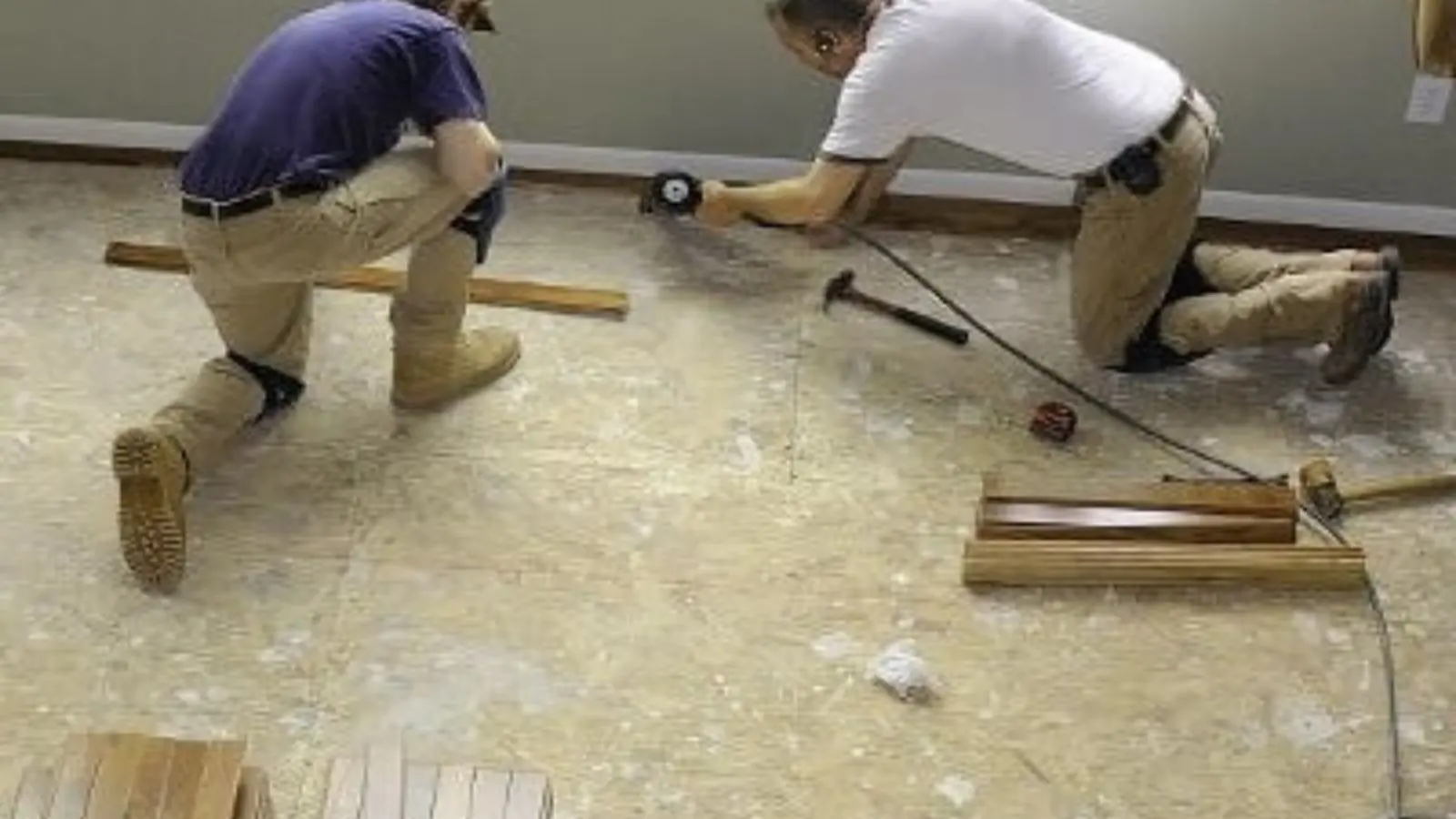
Solid hardwood that cupped slightly may flatten after drying and be sanded and refinished. Laminate and engineered boards that swelled at the seams generally have to be replaced. Tile usually survives, though the grout and the subfloor beneath should be checked.
Carpet that stayed wet for days is normally replaced, and so is its padding. If your flooring is discontinued, ask about matching a nearby product or continuing the new floor to a natural break, like a doorway, so the change in color looks planned.
Permits, inspections and building codes
LADBS, the Los Angeles Department of Building and Safety, says projects must comply with local building codes. Permits are applied for through PermitLA or ePlanLA with an Angeleno account. Whether your repair needs one depends on the scope, so ask your contractor and check with LADBS before work starts.
Working with your insurer on the rebuild
The state guide advises against extensive permanent repairs until the adjuster has assessed the damage. For structural damage it recommends written, line by line bids from licensed contractors. If your repair also requires bringing parts of the house up to current code, that usually falls under ordinance or law coverage, so ask your insurer what your policy includes.
What affects the cost of repairs
A line by line bid needs eyes on the house. Call to talk through your scope, and a project estimator can tell you what to gather before the visit.
- How much drywall, insulation and framing was removed
- Flooring type and square footage to be replaced
- Whether cabinets or built-ins need to come out and be reset
- Finish matching, including texture, paint and trim profiles
- Whether permits or inspections are part of the project
Matching finishes in Porter Ranch homes and older tracts
In neighboring Porter Ranch, a housing tract began around 1960 to 1963, and The Vineyards at Porter Ranch was built in 2019. Homes of different eras have different wall textures, trim and flooring, which affects how closely a repair can blend. Take photos of your finishes before the work starts, and read the Porter Ranch page if you live up there.
Frequently asked questions
How soon after drying can the rebuild start?
Once moisture readings confirm the framing, subfloor and drywall are dry, usually after a few days of equipment running. Scheduling depends on your insurer's review and material lead times. Starting early on demolition is common, but closing walls waits for the readings.
Do I need a permit for water damage repair in Chatsworth?
It depends on what is being rebuilt. LADBS says projects must comply with local building codes and permits go through PermitLA or ePlanLA. Ask your contractor to confirm the scope against LADBS rules, or ask LADBS directly.
The ceiling stain is still there after drying. Do I need to replace the drywall?
Not always. If the board is firm and flat, stain-blocking primer and paint may be enough. If it sags, feels soft or has a bulge, it should be cut out and replaced. A moisture meter reading helps settle the question.
Can I stay in the house during repairs?
Often yes for small jobs, though dust, noise and blocked rooms are part of the deal. Larger rebuilds that involve floors or kitchens may be easier with some rooms sealed off. Tell the estimator about children, pets and anyone with breathing concerns.
Will my insurance pay for repairs?
That depends on your policy and the cause. Sudden and accidental damage is often covered while gradual leaks often are not, and flood needs separate coverage. Ask your insurer, and see our page on flood damage restoration if the water came from outside.
Will new paint match the old paint?
Close matches are possible but not automatic, since old paint fades. Painting a whole wall or ceiling plane hides the difference far better than a spot patch. Save a leftover can or a paint chip if you have one.
Water on the floor right now? Call the 24/7 line.
☎ (818) 337-2642