
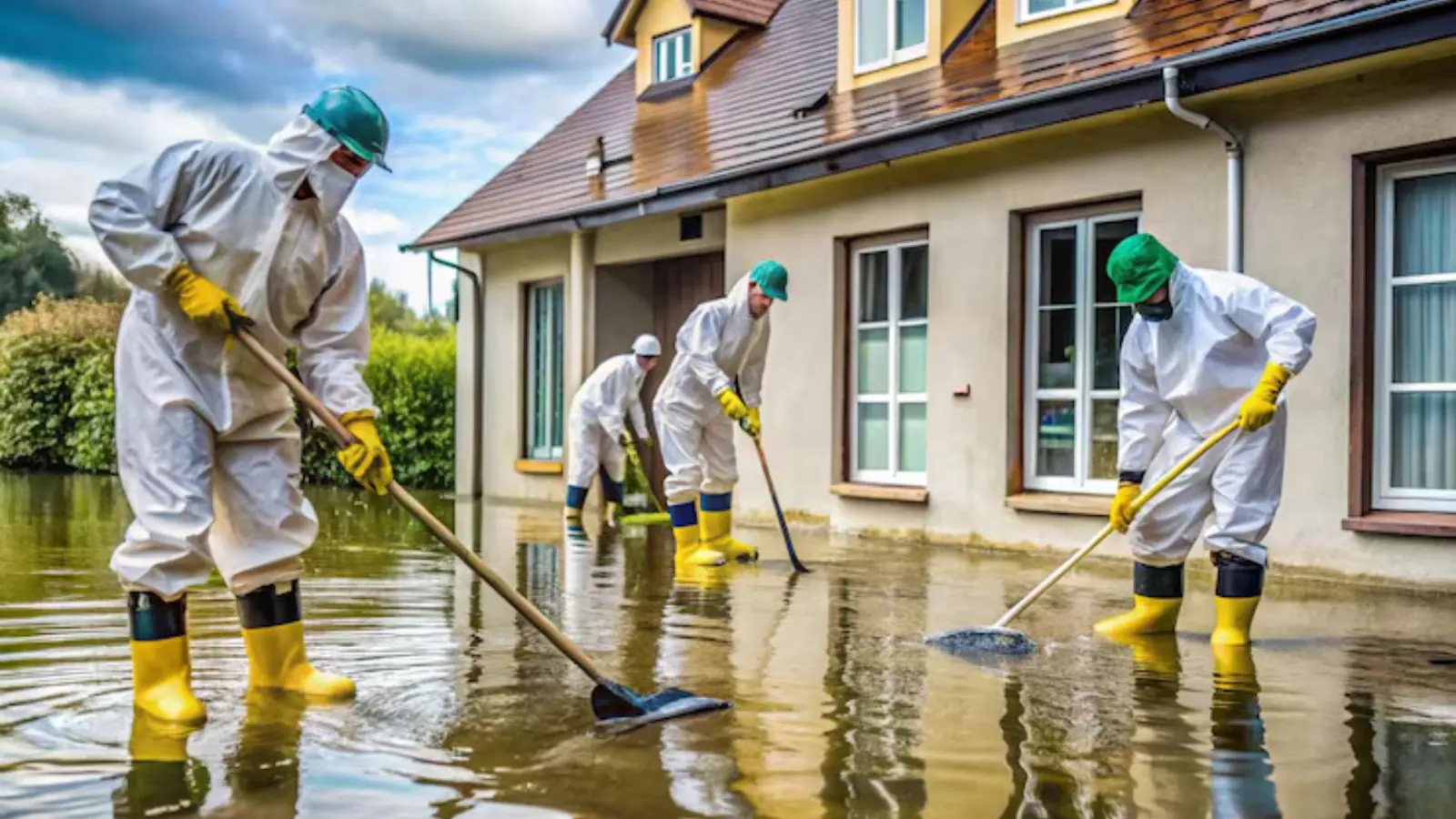
Dirty water is inside the house and it is still rising or spreading. Emergency flood damage restoration in Chatsworth, CA is available 24/7, so call at any hour. Until help arrives, stay out of the water, switch off the main water valve if the source is a pipe, move children and pets to dry ground, and carry valuables upstairs or onto high shelves.
Flood damage restoration is the removal, cleaning, drying and treatment of a building after storm water, groundwater or sewage has entered it. These are usually Category 2 or Category 3 waters, which means they can carry contamination and call for stricter handling than a broken supply line.
When flood water is an emergency
Call right away if water is coming under doors, backing up through a floor drain, or pooling in a garage or low room. Call right away if it has touched electrical outlets, a water heater, a furnace or a panel. These losses are urgent because contaminated water soaks into porous materials quickly.
Same-day response is offered when available, and after-hours calls reach the same dispatch as daytime calls. Give the dispatcher the address, what the water touched, and whether sewage is involved.
Safety first. Do not wade through flood water near outlets, extension cords or appliances. Cut power only if the panel is dry and safe to reach, and call 911 or the utility for any electrical or gas risk before you call the restoration line. Sewage means everyone stays out of the water.
Why flood water is handled differently
Clean tap water and storm water are not the same problem. Water that has crossed soil, a yard or a sewer line carries dirt and microorganisms, so the plan changes from drying to removal and treatment.
| Source | Category | What is done |
|---|---|---|
| Rain through a roof or window | Often Category 1 or 2 | Extract, dry, remove saturated insulation and padding |
| Runoff or groundwater entering at doors or slabs | Category 2 to 3 | Extract, remove carpet, pad and low drywall, apply antimicrobial treatment |
| Sewer backup or toilet overflow | Category 3 | Full protective gear, remove porous materials, disinfect, verify with moisture meters |
Emergency Flood Damage Restoration in Chatsworth? Call the 24/7 line.
☎ (818) 337-2642Basement and lower-level flooding cleanup
Many Valley homes have no basement, so flooding here usually shows up in garages, sunken living rooms, lower floors of split-level houses, and crawl spaces under raised foundations. The cleanup steps still follow the same logic. Water comes out first with pumps and extraction units, then wet materials are removed, then the space is dried.
Garages often store paint, chemicals and cardboard boxes, so crews sort those out before extraction. Crawl spaces need a different approach, with technicians working in tight access and checking for standing water, wet insulation and damp subfloor from below.
Homes on hillside lots can take water from uphill, through retaining walls, stairwells or low doorways. If your lot slopes toward the house, point downspouts away from the foundation and keep drainage paths clear before storm season. After a loss, dehumidifiers and air movers run in lower spaces for as long as readings show moisture, because cool, enclosed areas dry slowly.
Sewage backup cleanup
A sewage backup is Category 3 water. It may come from a clogged lateral or a blocked main line. Do not flush toilets or run water while backed up, since that can push more into the house.
Crews wear protective suits, gloves, boots and respirators. They extract the water, remove carpet, padding, baseboards and any drywall the sewage touched, and then scrub and apply antimicrobial treatment to the surfaces that stay. HEPA air scrubbers run during demolition to catch airborne particles.
Items that cannot be cleaned, like soaked mattresses and upholstery, are bagged and discarded. If the problem is in the line itself, a plumber must clear it. Call the city if you believe the blockage is in the public sewer.
Afterward, moisture meters confirm the structure is drying. Keep children and pets out until the crew says the area is ready, and ask what to do with any food or stored goods that sat in the affected space.
Chatsworth's reservoir history and why it still matters
Chatsworth Dam and Reservoir was built in 1918 as part of the Los Angeles Aqueduct system and is owned by LADWP. It was taken out of service in 1969 over water quality concerns tied to algae and storm inflow, and later abandoned as storage after seismic safety concerns that followed the 1971 San Fernando earthquake. Storm inflow was part of why it left service, so do not assume your street is immune to storm water.
Rain falls mostly from November through March, with nearly dry summers. Clear gutters and drains in October. Ask the city about drainage near your lot, and look up your address on the FEMA flood map rather than guessing.
Flood versus homeowners insurance
Homeowners policies do not cover flood damage. Flood insurance is a separate policy, so check your policy and ask your insurer what applies to storm water and to sewer backup. The California Department of Insurance says to report damage immediately, photograph everything, and keep receipts for temporary protection steps.
It also warns that policies may not cover ensuing damage if you did not take reasonable steps to secure the property. Do not discard damaged items until your adjuster says it is acceptable.
What affects the cost of flood restoration
Flood jobs vary too much for a quote over the phone. Call, describe what the water touched, and ask what the first visit will include.
- The water category and how long it sat
- Depth of the water and square footage affected
- How much carpet, padding, drywall and insulation must be removed
- Whether sewage is involved and what protective steps that requires
- Access, such as a crawl space or hillside entry, and how many days of drying
West Hills, Bell Creek and low spots along the creek
West Hills lies south of the Chatsworth Reservoir area, and Bell Creek, a headwater creek of the Los Angeles River, starts in the Simi Hills. If you live near a creek channel or low ground, check your address against the FEMA map, and see the West Hills page for local details. A water damage cleanup visit often follows once the water is out.
Frequently asked questions
Do you handle flood damage restoration emergencies at night or on weekends in Chatsworth?
Yes. Dispatch is open overnight, on weekends and on holidays. Same-day response is offered when available, though no one can promise an exact arrival time because storms can strain every crew at once. Call early, and follow the safety steps on this page while you wait.
Is storm water or flood water considered contaminated?
Usually yes. Water that has crossed soil, yards, streets or a sewer line is treated as Category 2 or 3 under ANSI/IICRC S500, which is a published standard you can ask any company about. That is why porous materials are often removed rather than dried.
Water is coming up in my garage. What do I do first?
Stay out if it is deep or near outlets. Close the garage door if you can reach it safely, and keep clear of the panel unless it is dry. Photograph the water, then call. The crew will extract and check for wet drywall and stored items.
Does homeowners insurance cover flood damage?
Homeowners policies generally do not cover flood. Flood coverage is a separate policy, so check yours or ask your insurer. Sudden pipe breaks inside the house are treated differently, and the emergency water removal page covers that side.
What if sewage came up through a floor drain?
Treat it as Category 3. Keep people and pets out, do not run water or flush, and call. Crews wear protective gear, remove affected porous materials and treat surfaces. The area is verified dry afterward with moisture meters.
Can flood damage lead to mold?
Wet materials can support mold if they stay damp, which is why fast drying matters. No service can promise mold will never appear. If it does, testing and cleanup follow ANSI/IICRC S520 through mold remediation.
Water on the floor right now? Call the 24/7 line.
☎ (818) 337-2642