
A pipe let go on Tuesday, the carpet is soaked, and the first question on your mind is when life gets back to normal. Nobody can answer that honestly from a phone photo. Water damage repair is a chain of phases, and each one has its own clock.
This guide walks through the chain in order, shows where the time usually goes, and gives you a framework for sizing your own job. Treat every range as an "it depends" and ask your contractor to explain what the estimate rests on.
The four phases in plain language
Think of the work as mitigation, drying, demolition and rebuild. Some jobs skip the last two. Others loop back, for example when drying shows that insulation behind a wall never recovered.
The first phase stops the damage from growing. The second removes moisture you cannot see. The third takes out materials that cannot be saved. The fourth puts the home back together.
- Mitigation: stop the source, extract standing water, protect what can be saved.
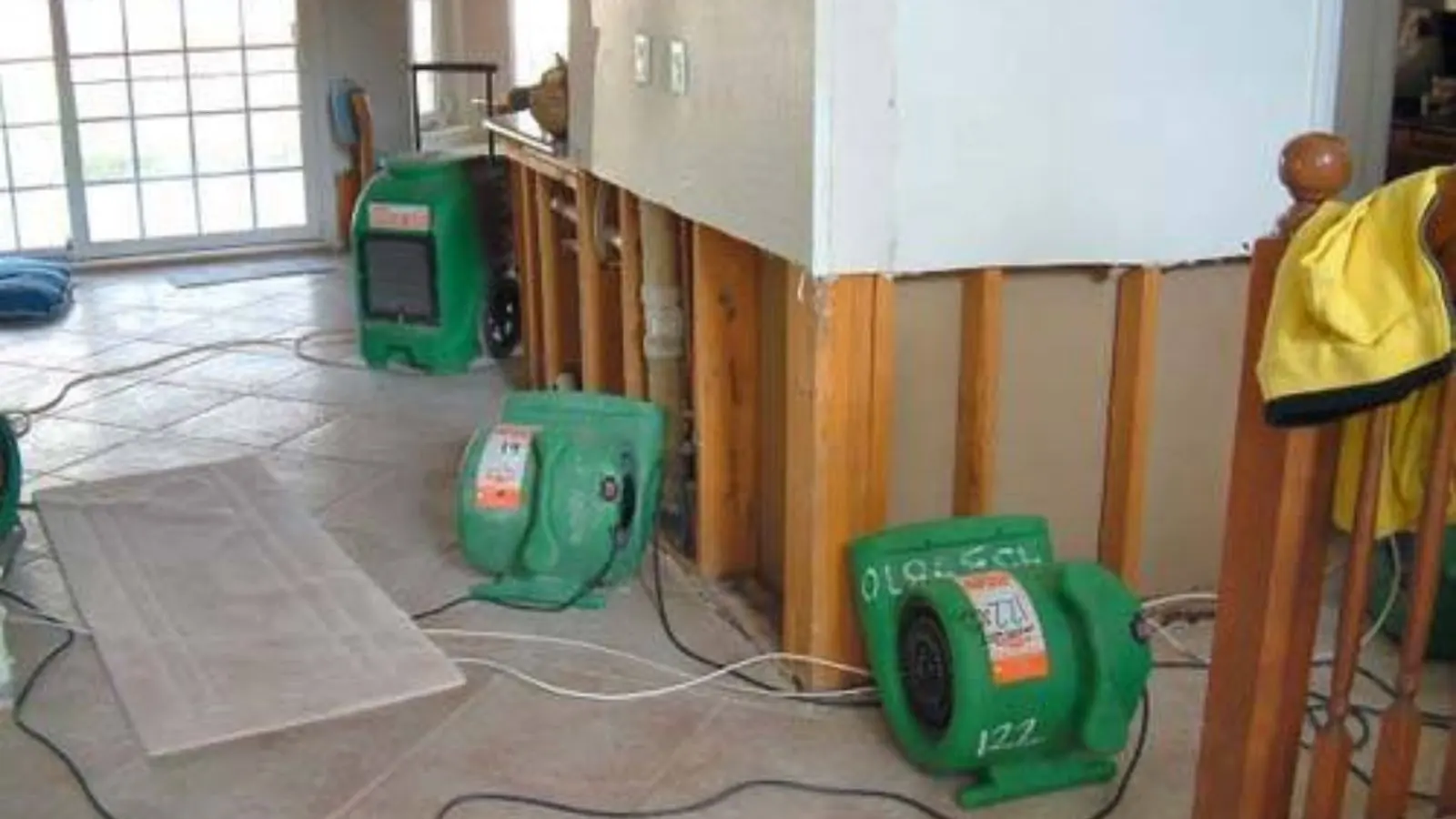
- Drying: air movers and LGR dehumidifiers pull moisture from structure and contents.
- Demolition: remove wet drywall, insulation, flooring or cabinetry that will not dry in place.
- Rebuild: replace materials, then paint, texture and finish.
Phase one: mitigation
Mitigation is the shortest phase on paper and the one with the biggest effect on everything after it. Crews locate the source, extract standing water with extraction units, and set up a plan. Rapid water mitigation is the step that keeps a small problem from becoming a large rebuild.
Delay here is the main reason jobs run long. Water that sits can travel into wall cavities and under flooring, and that adds scope to every later phase.
Photograph the room before crews arrive if it is safe to do so. Those images help the team see what the water touched first, and they help your insurer follow the story later.
If water has touched outlets, panels or appliances, stay out of the room. Cut power only if the panel is dry and safe to reach. Call 911 or the utility for electrical or gas risk before calling a restoration company. Sewage means stay out as well.
How Long Does Water Damage Repair Take in Chatsworth? Call the 24/7 line.
☎ (818) 337-2642Phase two: drying and monitoring
Drying is usually the phase people underestimate. Wet building materials release moisture slowly, and surface dryness does not mean the framing behind it is ready. Crews use moisture meters and thermal imaging cameras to check readings, then adjust equipment placement.
Equipment runs until readings reach the dry standard for your materials. That target comes from industry practice such as ANSI/IICRC S500, and you can ask any company whether its crews work to it. Cutting this phase short is how hidden dampness ends up under new paint.
- Crews set air movers and LGR dehumidifiers and record starting readings.
- They revisit on a schedule and log readings on each visit.
- Equipment is repositioned as wet spots shrink.
- Final readings are compared with dry reference points before equipment leaves.
Phases three and four: demolition and rebuild
Demolition is quick compared with drying, but it sets the scope for the rebuild. Taking out wet drywall and baseboard early lets the cavity dry faster. It also gives you a clear list of what has to be replaced.
Rebuild time swings the most from home to home. Material availability, matching existing finishes, insurance scope discussions and your own selections all play a part. A straightforward drywall and paint repair is a different animal from new flooring and cabinets, and our water damage repair page lists the typical rebuild items.
Ask who orders materials and who holds the schedule once demolition ends. Many delays happen in the handoff between the drying crew and the rebuild trades. One named point of contact removes most of that friction.
A decision framework for sizing your job
Use the table to place your situation. The right column shows what mainly decides how long it runs. None of these are promised schedules.
| Job type | Typical phases involved | What mostly decides the length |
|---|---|---|
| Small clean-water spill, contained | Mitigation and drying | Material type and how fast action began |
| Leak that reached walls or subfloor | Mitigation, drying, partial demolition | Moisture readings and how far water traveled |
| Large loss across several rooms | All four phases | Scope agreement, materials and trade scheduling |
| Loss involving sewage or storm water | All four phases plus extra cleanup | Contamination controls and material replacement |
| Repairs needing a city permit | All four phases plus approval steps | Permit review and inspection scheduling |
Ask for the plan in writing, with drying goals and a check-in schedule. A vague promise to be done soon is not a plan.
What stretches a schedule, and what helps
Hidden damage found mid-job is the classic surprise. So is a gap between drying finishing and an insurance scope being agreed. Special-order materials can also add waiting time that no crew controls.
You can shorten the waiting by making decisions early and keeping communication open. Choose finishes while drying is still underway, and keep your adjuster informed with photos and invoices. Most stalled projects trace back to a late first call, so early water mitigation is the best schedule insurance.
- Photograph conditions before and after demolition.
- Pick paint, flooring and fixtures while equipment is still running.
- Ask what could change the schedule and who tells you when it does.
- Request a written scope that separates drying from rebuild.
Chatsworth permits and the LADBS question
Chatsworth is a neighborhood of the City of Los Angeles, so building rules come from LADBS, the Los Angeles Department of Building and Safety. LADBS says projects must comply with local building codes, and permits are applied for through PermitLA or ePlanLA with an Angeleno account. Before a rebuild begins, ask LADBS whether your scope needs a permit, because approval and inspections can add time that has nothing to do with drying.
Rain here falls mostly from November through March, and summers are nearly dry. If your loss comes from a roof leak in the wet season, plan on a dry-out first and a roof repair that fits the weather. Ask your contractor to sequence the roof, the drying and the interior so one does not undo the other.
Crews work across the west Valley, including Northridge and West Hills. Neighbors there face the same permit and sequencing questions, so ask them early.
Frequently asked questions
How long does drying take after a water loss?
It depends on how much water entered, how long it sat, the materials involved and the conditions in the home. Crews monitor with moisture meters and keep equipment running until readings reach the dry standard. Ask for readings at each visit so you can see progress rather than rely on a guess.
Do I need a permit for water damage repairs?
It depends on the scope. LADBS says projects must comply with local building codes and that permits are applied for through PermitLA or ePlanLA with an Angeleno account. Ask LADBS whether your planned work needs one, and ask your contractor who handles the application.
Why did my estimate change halfway through?
Hidden damage often shows up once walls or flooring are opened. A good contractor documents it with photos and readings, then explains the change before proceeding. If your claim is open, share the new findings with your adjuster promptly.
Does the dry Chatsworth summer make drying faster?
Dry outdoor air can help, but the drying that matters happens in sealed wall cavities and under flooring. Crews still need meters and equipment to confirm results. Do not open the house and assume the job is done.
Can I stay in the house during repairs?
Often yes for smaller jobs, but noise, equipment and dust change daily life. Larger losses, sewage and contaminated water may make staying impractical. Ask your contractor about containment, and check your policy for any additional living expense coverage.
Water on the floor right now? Call the 24/7 line.
☎ (818) 337-2642