
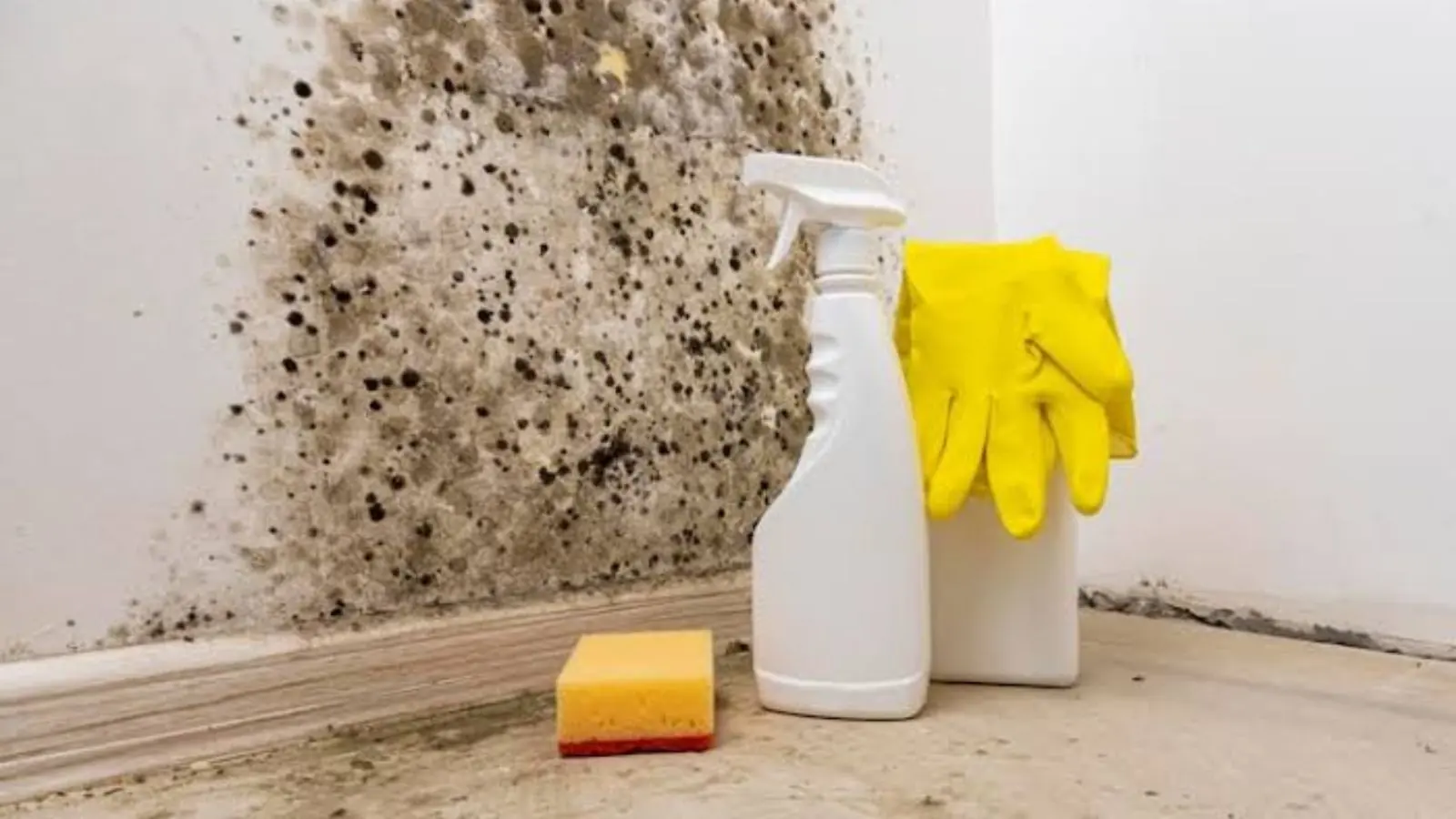
You found a dark patch on the bathroom ceiling and want to know how to clean mold without making it worse. The answer depends on size, surface and cause. A small patch on a hard, non-porous surface is a manageable chore, while growth in or behind building materials is a job for trained crews.
Below is a decision framework to sort your situation, a short method for the small cases, and a list of things to avoid. If you are unsure which category you are in, stop and call.
Step zero: find and fix the moisture
Cleaning without fixing the water is wasted effort. Check for a dripping pipe, a failed seal, a roof leak or poor ventilation before you pick up a sponge. If the source is still active, growth will return no matter how carefully you clean.
If the moisture came from a larger water loss, deal with that first. Our water damage cleanup service covers extraction and drying so the area is ready for any mold work.
Photograph the area before you start. If an insurance claim is possible, ask your insurer what documentation it wants before anything is removed.
Small patch or something bigger? A decision framework
Answer the questions in order. The first yes in the right-hand column tells you which path to take.
| Question | If yes | If no |
|---|---|---|
| Is the area larger than a few square feet? | Stop and call a professional | Go to the next question |
| Is growth on drywall, carpet, ceiling tile or insulation? | Stop and call a professional | Go to the next question |
| Did it follow sewage or storm water? | Stay out and call for help | Go to the next question |
| Is there a musty smell with no visible source? | Stop and call a professional | Go to the next question |
| Is it a small patch on tile, glass, sealed metal or similar hard surface, and the moisture source is fixed? | Household cleaning may be reasonable | Call a professional to assess |
Not sure? Treat it as the bigger case. A short call costs less than spreading growth through a house.
How to Clean Mold in Chatsworth? Call the 24/7 line.
☎ (818) 337-2642Protective basics for a small clean-up
Protect yourself and your home before you start. Wear gloves, eye protection and a well-fitting respirator suitable for dust. Ventilate by opening a window and running a fan that exhausts outdoors, and keep children, pets and anyone with health concerns out of the area. Questions about your own health belong with a physician.
Check the room again after an hour for dust or smell. If anything seems off, leave the area and ventilate before you decide to continue.
- Seal off the area with plastic sheeting if the room connects to living space.
- Wear long sleeves and clothing you can wash right away.
- Keep pets and other household members out until you finish.
- Bag waste tightly before carrying it through the house.
A simple method for a small hard-surface patch
Keep it plain. Mild detergent and water are enough for many hard surfaces, and a damp cloth beats scrubbing hard enough to throw particles into the air.
Porous materials are a different case. Mold can root into drywall paper, grout, wood and fabric, so wiping the surface may leave growth behind. If the item cannot be cleaned to bare, hard material, plan on replacing it with professional help.
- Confirm the moisture source is fixed and the surface is hard and non-porous.
- Put on gloves, eye protection and a respirator, and ventilate the room.
- Wipe with a cloth dampened in detergent solution, working from clean toward dirty.
- Rinse the cloth often, then wipe again with clean water.
- Dry the surface completely with a towel and a fan.
- Bag the cloths and wash your clothes right away.
What not to do
Most mistakes spread the problem or add a hazard. Avoid every item below, and hold off if you are unsure of what you are dealing with.
- Do not mix cleaners. Combining products such as bleach and ammonia can release dangerous fumes.
- Do not dry-brush or scrape, because it sends particles into the air.
- Do not paint over growth or a stain. Paint hides the problem and often peels.
- Do not run a central fan or air conditioner while cleaning, since ducts can spread dust.
- Do not cut into walls or ceilings to see what is inside.
Water near outlets or panels is an emergency. Stay out, cut power only if the panel is dry and safe to reach, and call 911 or the utility before calling a restoration company.
After the clean-up: keep it dry
The work is not done when the cloth goes in the bag. Dry the area with a fan and a dehumidifier, and watch it for a few weeks. A dated photo each week shows whether anything is changing.
Fix what fed the problem. Run bathroom fans during and after showers, keep furniture a few inches off cool exterior walls and repair drips promptly. If a dehumidifier collects water daily, that is a sign of excess moisture in the house worth tracing.
If the stain returns, stop cleaning and ask for an assessment. A return is the building telling you the moisture source has not been found yet.
When to stop and call, and what professionals do
Stop if the patch grows back, if the surface is porous, if you cannot find the source, or if the smell lingers. At that point cleaning is not the right tool. Professional mold remediation begins with an assessment and a written scope.
Ask any company whether its crews follow ANSI/IICRC S520, the published standard for mold remediation. Work usually includes containment, HEPA air scrubbers, controlled removal and verification that materials are dry. No one can promise that mold will never return, so look for plans that address the moisture itself.
Chatsworth seasons, repairs and permits
Rain falls mostly from November through March in Chatsworth, and summers are nearly dry. Check bathrooms, attic access and window corners in late autumn, then again in early spring. A quick look at the start of the rainy season turns a small leak into a small repair.
Chatsworth is a neighborhood of the City of Los Angeles, and LADBS says projects must comply with local building codes. If remediation leads to rebuilding walls or ceilings, ask LADBS whether your scope needs a permit, since permits are applied for through PermitLA or ePlanLA with an Angeleno account.
Neighbors in Northridge and Canoga Park can use the same checklist.
Frequently asked questions
Does vinegar or bleach kill mold on walls?
Household products can clean some hard surfaces, but they do not fix the moisture and are less effective on porous materials like drywall. Never mix cleaners. For anything beyond a small hard-surface patch, call a professional for assessment.
How big a mold patch can I clean myself?
As a rule of thumb, a small patch on a hard, non-porous surface with the moisture fixed is a household task. If the area is larger than a few square feet, sits on porous material or follows sewage or storm water, call a professional instead.
Should I paint over mold after cleaning?
Only after the surface is fully dry and the source is fixed. Painting over damp growth hides it and invites peeling. If a stain returns, there is likely hidden moisture and an assessment is the next step.
Will the mold come back after cleaning?
That depends on whether the moisture is controlled. No cleaning method can promise that mold will never return. Fix leaks, improve ventilation and dry wet materials quickly to lower the chance.
Do I need a permit to rebuild after mold work in Chatsworth?
It depends on the scope. LADBS says projects must comply with local building codes, and permits go through PermitLA or ePlanLA with an Angeleno account. Ask LADBS whether your planned rebuild needs one before work begins.
Water on the floor right now? Call the 24/7 line.
☎ (818) 337-2642