
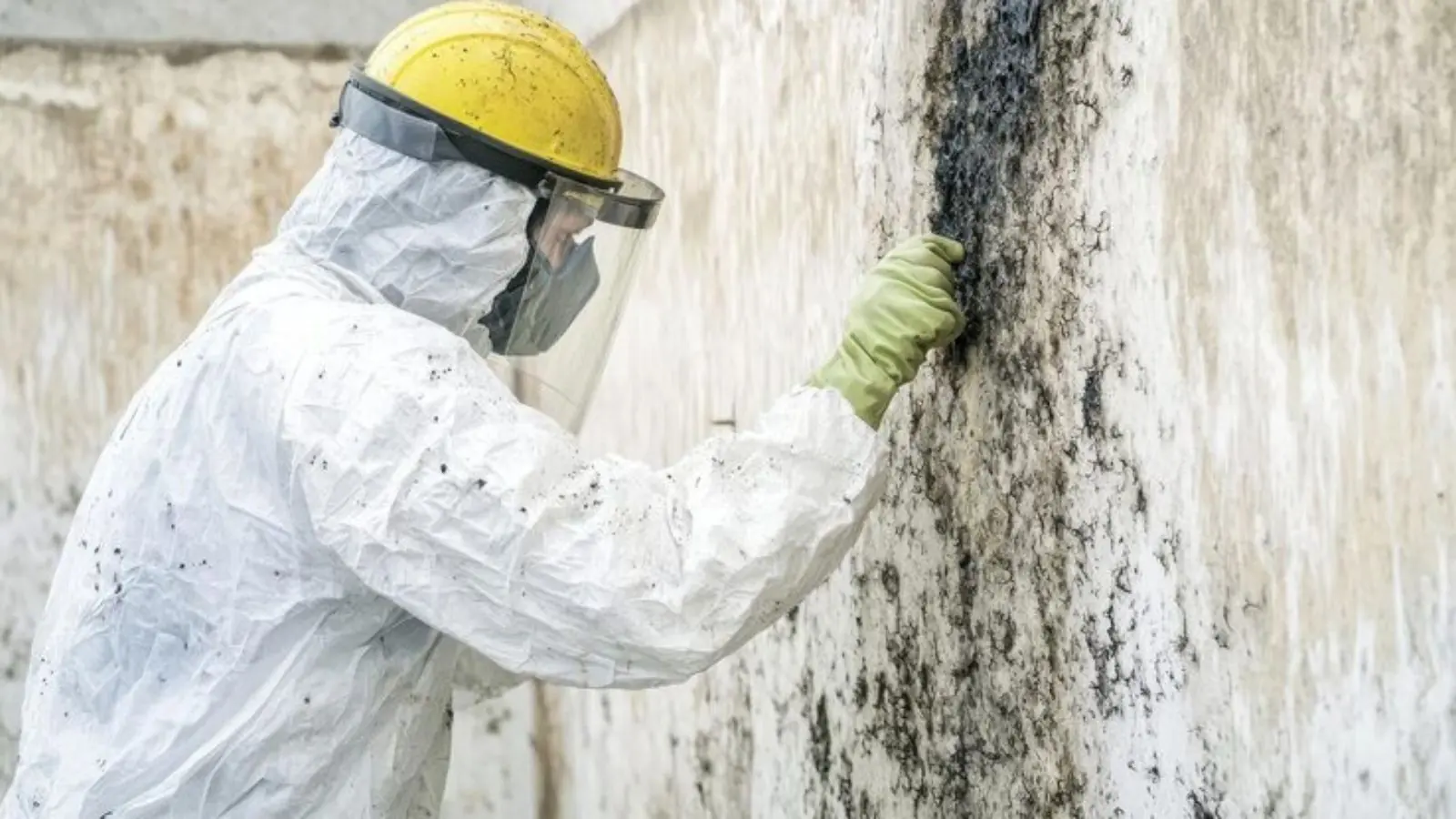
If you are searching for how to kill black mold, you probably found a dark patch on a wall, a ceiling corner or the back of a cabinet. Your first instinct is to grab a spray bottle. Hold that thought for a few minutes.
Killing mold and removing mold are two different jobs, and the second one is what actually clears a home. This guide covers the common myths, the order of work that makes sense, and the point where a small cleanup becomes a job for trained crews working to published industry standards.
Killing mold versus removing mold
A product can kill surface mold and still leave the problem in place. Dead mold is still physical material stuck to drywall, wood or fabric. It can stay where it is, stain the surface and keep holding on to whatever moisture is around it.
Professional mold remediation focuses on removal and cleaning of the affected material, plus fixing the cause. That is why the industry standard for mold work, ANSI/IICRC S520, talks about containing, removing and verifying rather than just spraying. Ask any company you call whether its crews work to S520.
Five myths worth dropping
- Myth: bleach solves it. Bleach can lighten stains on hard, non-porous surfaces like tile. On porous material such as drywall, wood and grout lines, it generally does not reach what is growing below the surface, and the leftover water can feed the problem.
- Myth: a darker color means a worse problem. Color alone tells you very little. Only a qualified person, often with testing, can say what a growth actually is.
- Myth: stronger is better, so mix two cleaners. Never mix bleach with ammonia or with other cleaning products. Mixing household chemicals can release dangerous fumes.
Never combine cleaning products. If you smell chemical fumes in a closed room, leave the room, open a door to outside air and do not go back in until it clears.
How to Kill Black Mold Chatsworth, CA in Chatsworth? Call the 24/7 line.
☎ (818) 337-2642Find the moisture first
Mold needs moisture to grow. If the source of water is still active, any cleaning you do is temporary, because the same damp spot will feed the next patch. So the first job is detective work, not scrubbing.
Walk the area and look for the usual suspects. A slow drip under a sink, a weeping supply line behind a wall, a roof leak that only shows up after a storm, a bathroom fan that vents into the attic instead of outside. A moisture meter and a thermal imaging camera, which professionals carry, can find damp spots you cannot see.
- Check under every sink and around the water heater for stains or soft cabinet floors.
- Look at ceilings below bathrooms and above exterior walls for rings or bubbling paint.
- Press on baseboards and the bottom of drywall. Soft or crumbly means it has been wet a while.
- Look at window sills and frames for water tracks after rain.
A sensible order of work
Once the moisture source is found, the order matters more than the product. Doing steps out of sequence is the usual reason a patch comes back.
- Stop the water. Shut the supply line, patch the roof temporarily or schedule the plumber.
- Photograph everything before touching it, wide shots first, then close-ups.
- Dry the area with air movers and a dehumidifier. If the material is still wet, nothing else will hold.
- Seal off the room with plastic sheeting and close the vents so spores are not pulled into the rest of the house.
- Decide whether the job is small and on a hard surface, or whether it has reached drywall, insulation or framing.
- For anything beyond a small, hard-surface spot, stop and call a remediation company.
When a patch is a DIY job and when it is not
A small spot on a sealed tile or a glass window frame can often be wiped with detergent and water and dried thoroughly. Wear gloves, eye protection and a well-fitted mask, and keep the area ventilated. Discard the cloths in a sealed bag.
Once growth has reached porous material, covers a larger area, or sits near an HVAC return, the situation changes. Cutting into a wall without containment can send material through the house. If you suspect the cause is a past leak, a water mitigation visit to find and dry hidden moisture often comes before any cleanup.
| Situation | Typical approach | Who handles it |
|---|---|---|
| Small spot on tile or glass | Detergent, water, thorough drying | Homeowner, with gloves and a mask |
| Spots on painted drywall or ceiling | Find the leak, then assess material | Professional assessment advised |
| Growth inside a wall cavity or attic | Containment, removal, air scrubbing | Remediation crew |
| Return after a past cleanup | Re-check moisture sources | Professional with moisture detection |
What professional remediation looks like
A professional job starts with finding the extent of the problem using moisture meters and thermal imaging, then setting up containment. Crews place plastic barriers and use negative air pressure so disturbed material stays in the work zone.
Affected materials that cannot be cleaned are removed and bagged. Surfaces that can be saved are cleaned with HEPA vacuuming and wiping, and antimicrobial treatment may be applied where appropriate. HEPA air scrubbers run during and after the work. Your mold remediation provider should explain each step and tell you what was found, with documentation you can keep for your records.
No honest company can promise that mold will never return. A good job removes the material, addresses the moisture and tells you what to watch for. Health questions belong with your physician.
Keeping a record for your insurer
If the growth came from sudden water damage, the California Department of Insurance advises reporting the damage right away and keeping receipts for reasonable temporary protection steps. It also suggests drying wet areas promptly with air circulation and dehumidification to limit mold.
If the leak happened slowly over time, mold may already be present. The CDI guide says to contact the adjuster and arrange professional testing and cleanup. Keep a log of your calls, and do not discard damaged items until the adjuster says it is acceptable.
Mold and the Chatsworth rain season
Chatsworth has a Mediterranean climate, with rain falling mostly from November through March and nearly dry summers. That means roofs, window seals and exterior walls get their real test in a few months. Walk the inside of your house after the first solid storm and look for new stains, so a leak is caught while it is still small.
The dry summer works in your favor if you use it. Fix flashing, caulk and gutters before the wet months, and let any damp area dry out fully. Neighbors in Porter Ranch, at 1,280 feet below the Santa Susana Mountains, and in Winnetka to the south share the same wet and dry seasons, so the same pre-winter check applies to their homes too.
If your repair needs permits, such as opening a wall for plumbing, LADBS says projects must comply with local building codes and that permits are applied for through PermitLA or ePlanLA with an Angeleno account. Ask your contractor to confirm whether your scope needs one.
Frequently asked questions
Does bleach kill black mold?
Bleach can lighten stains on hard, non-porous surfaces, but on porous materials like drywall and wood it generally does not address growth below the surface. It also adds water. Never mix bleach with ammonia or other cleaners. For anything beyond a small hard-surface spot, ask a mold remediation company how it works to ANSI/IICRC S520 rather than relying on a spray.
Can I tell if a dark patch is black mold by looking at it?
No. Color alone cannot identify mold, and plenty of stains, dirt and soot look similar. Only a qualified person, sometimes with testing, can say what a patch actually is. What you can do right away is find out whether the area is damp, because moisture is the condition that matters either way.
Will mold come back after cleanup?
Nobody can promise it will not. Whether growth returns depends mainly on whether the area stays dry. That is why finding and fixing the moisture source comes first, and why drying with air movers and a dehumidifier is part of the job. Ask your provider what moisture readings they took and what they recommend you watch for.
Why does mold seem to show up after the first big storm in Chatsworth?
Rain falls mostly November through March here, so a roof, flashing or window seal that held through the dry summer may leak at its first real test. Water can travel inside a wall before it shows. If a stain appears after a storm, photograph it, check the attic or the wall below it, and call for a moisture assessment.
Water on the floor right now? Call the 24/7 line.
☎ (818) 337-2642