
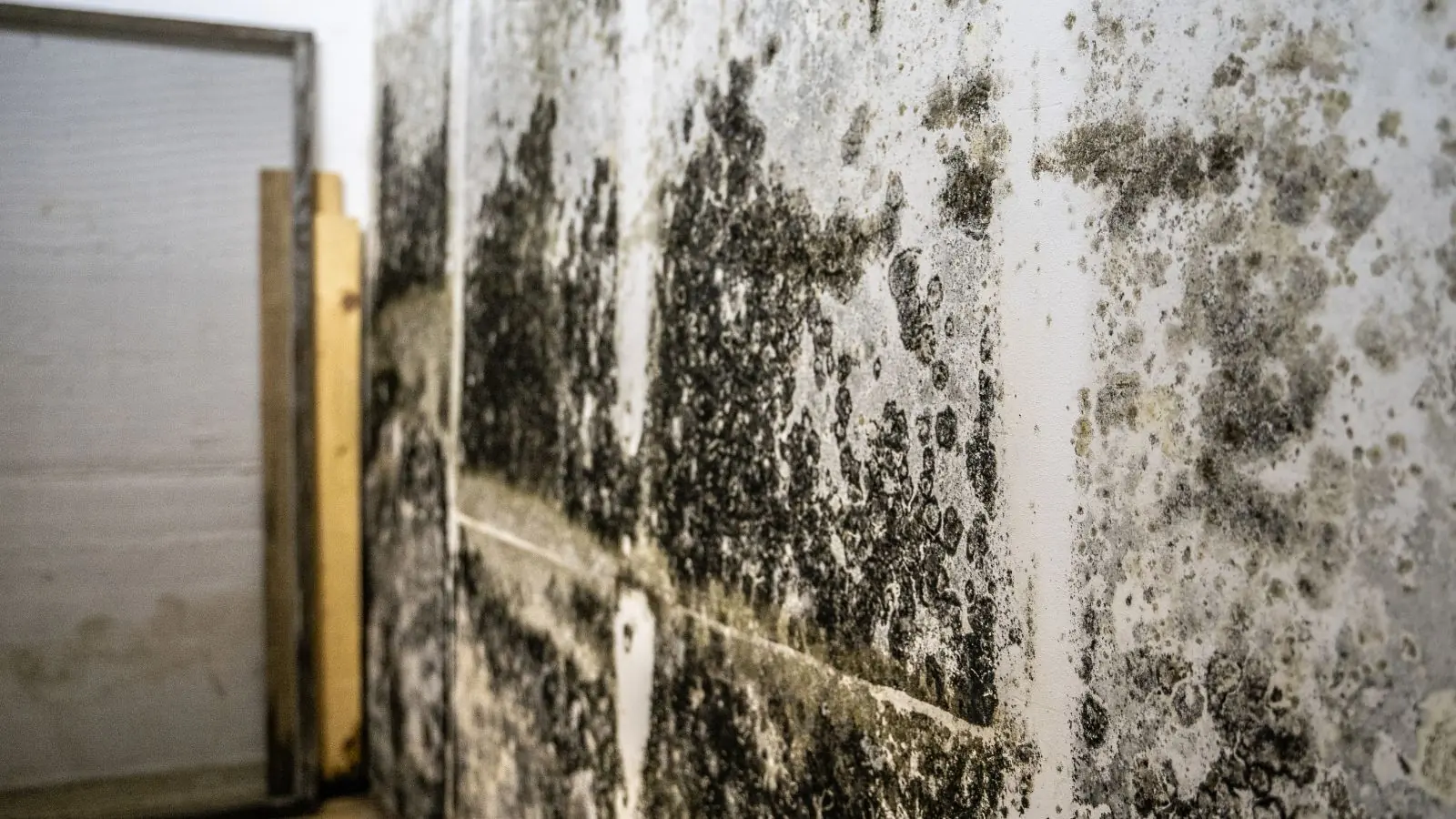
Start with a reality check. Many homes in the Chatsworth area do not have a basement at all. What they have instead are garages cut into a slope, lower-level rooms, retaining walls and crawl spaces, and those are the places where moisture and mold tend to show up.
So this guide answers the basement wall question for the spaces Chatsworth homeowners actually have. It explains how to decide between a small cleanup you can handle and a larger job that needs a professional, and it is clear about what no one can promise. Mold needs moisture. If the moisture stays, the mold has a reason to return.
Where mold really turns up in Chatsworth homes
Without basements, the damp spots move. A lower-level bedroom or family room sits against soil on one side. A garage wall backs onto a hillside. A crawl space collects water from a leak and has little airflow to dry it out.
- Lower-level rooms with walls against soil or a retaining wall.
- Garages with stored boxes, cardboard and paper against exterior walls.
- Crawl spaces under raised floors, especially near plumbing.
- Walls below a leaking window, hose bib, or planter bed.
- Closets and cabinets on exterior walls that stay shut.
Find the moisture before you touch the mold
Cleaning a wall without fixing the moisture source is like mopping with the tap still running. Trace the water first. Look for stains that line up with a roof drain, a downspout, a dripping pipe or soil piled against the stucco.
A moisture meter can tell you whether a wall is still wet, and a thermal imaging camera can show a cool, damp patch you cannot see. Both are tools a restoration crew carries, and both help you avoid repeating the same cleanup next winter.
- Look for the visible source, such as a drip, a plugged drain or a cracked pipe.
- Check outside the wall for soil, planters or sprinklers aimed at the foundation.
- Feel wall bases and baseboards for dampness, and note musty smells.
- Photograph everything with the date.
- Stop the water source before any cleanup starts.
How to Remove Mold From Basement Walls Chatsworth, CA in Chatsworth? Call the 24/7 line.
☎ (818) 337-2642Small area or large area? A decision framework
Most guidance on mold separates small surface problems from larger or hidden ones. The published standard for mold remediation, ANSI/IICRC S520, is used by professionals to plan containment, removal and clearance. You can ask any company whether its crews follow it.
| Situation | Likely approach | Why |
|---|---|---|
| Small spot on a hard, painted or sealed surface, source already fixed | Careful homeowner cleaning | Surface can be wiped and dried and the area is easy to contain |
| Mold on drywall, carpet, insulation or wood framing | Call a professional | Porous materials often need removal, not wiping |
| Large or spreading area, or growth in several rooms | Call a professional | Containment and air control are needed |
| Musty smell with no visible growth | Moisture check first | Growth may be inside a wall or under a floor |
| Mold after sewage or long-standing water | Professional only | Contaminated materials need proper removal |
| Anyone in the home has a health concern | Ask a physician | Health questions belong to a doctor |
If water has touched outlets or a panel, or sewage is involved, stay out, cut power only if the panel is dry and safe to reach, and call 911 or the utility for electrical or gas concerns before calling a restoration company.
A cautious cleanup for a small, hard-surface spot
If the problem is small, on a sealed or painted hard surface, and the moisture source is fixed, a careful cleanup may be reasonable. Keep it gentle. Scrubbing hard or sanding sends spores into the air and spreads the problem.
Wear gloves, eye protection and a well-fitted respirator, keep the room ventilated and keep other people out. Use detergent and water, wipe in one direction, and dry the surface completely. Throw wipes in a sealed bag.
- Fix the water source first and let the surface dry.
- Isolate the area by closing doors and covering vents.
- Wipe the surface with detergent and water, working in one direction.
- Dry with fans and a dehumidifier, and recheck over the next days.
- Stop and call a professional if growth returns or the area is larger than it looked.
What a professional job looks like
Larger jobs follow a plan. Crews seal off the work area, run HEPA air scrubbers, remove materials that cannot be cleaned, and apply antimicrobial treatment where it makes sense. Clearance testing at the end shows whether the area meets the plan's goals.
A company offering mold remediation should be able to explain its scope in writing and say how it will handle containment. They should also be honest that mold can come back if moisture does. If the cause was a leak or intrusion, water mitigation comes first, since drying the structure removes the condition mold needs.
- Written scope that names the rooms, materials and containment.
- Moisture readings before and after drying.
- A plan for testing, if testing is part of the job.
- No claims that mold will never return.
Insurance and timing
The California Department of Insurance guide says that after sudden water damage, wet areas should be dried promptly with air circulation and dehumidification to limit mold. If leakage happened over time, mold may already be present. In that case it advises contacting the adjuster and arranging professional testing and cleanup.
Coverage depends on your policy and on whether the water was sudden or gradual. Check your policy, ask your insurer, and photograph the area before anything is cleaned or removed.
Storm water history, West Hills and Porter Ranch
West Hills borders the Chatsworth Reservoir area to the north, and Bell Creek, a headwater creek of the Los Angeles River, starts in the Simi Hills. For a homeowner, that is a reminder that storm water moves through this area, so check where your downspouts and grading send it.
The Chatsworth Dam and Reservoir, built in 1918 for the Los Angeles Aqueduct system, was taken out of service in 1969 over water quality concerns tied to algae and storm inflow. Storm inflow has long been part of this area's story. See the West Hills location page for local guidance.
Rain falls mostly from November through March, and summers are nearly dry. Walls that took on water in winter dry slowly in a closed garage, and a dry summer can hide a problem that was never solved. Look at the base of lower walls in April and again in October.
Porter Ranch is hilly, with the Santa Susana Mountains to the north. On a sloped lot, water can collect behind any retaining wall or against a cut-in garage wall. Homeowners can read the Porter Ranch page and then check weep holes and drainage before the rains.
Frequently asked questions
Do Chatsworth homes have basements?
Many do not. What you find more often are lower-level rooms, garages built into slopes, retaining walls and crawl spaces. Those spaces can have the same moisture and mold concerns as a basement, so the same approach applies: find the moisture, decide on small or large, and call a professional for larger or hidden growth.
Can I just spray the wall and be done?
Surface treatment alone does not address the cause. If moisture remains, mold has a reason to return. Fix the water source, dry the area, and clean or remove affected materials. For porous materials like drywall or insulation, removal is often needed.
When should I call a professional?
Call when growth is large or spreading, when it is on drywall, carpet, insulation or framing, when there is a musty smell with no visible source, or when sewage or long-term water is involved. Ask whether crews follow ANSI/IICRC S520.
Does mold testing come first?
Not always. If you can see growth and know the moisture source, the plan may not depend on a test. Testing can help when there is a smell without visible growth, or when a clear record is needed. A professional can tell you whether it fits your situation.
Why does the old reservoir matter to my garage wall?
It does not directly. The Chatsworth Reservoir history is a reminder that storm inflow has long been an issue in this part of the Valley. For your home, that points to checking drains, grading and wall bases each fall before rain returns.
Water on the floor right now? Call the 24/7 line.
☎ (818) 337-2642