
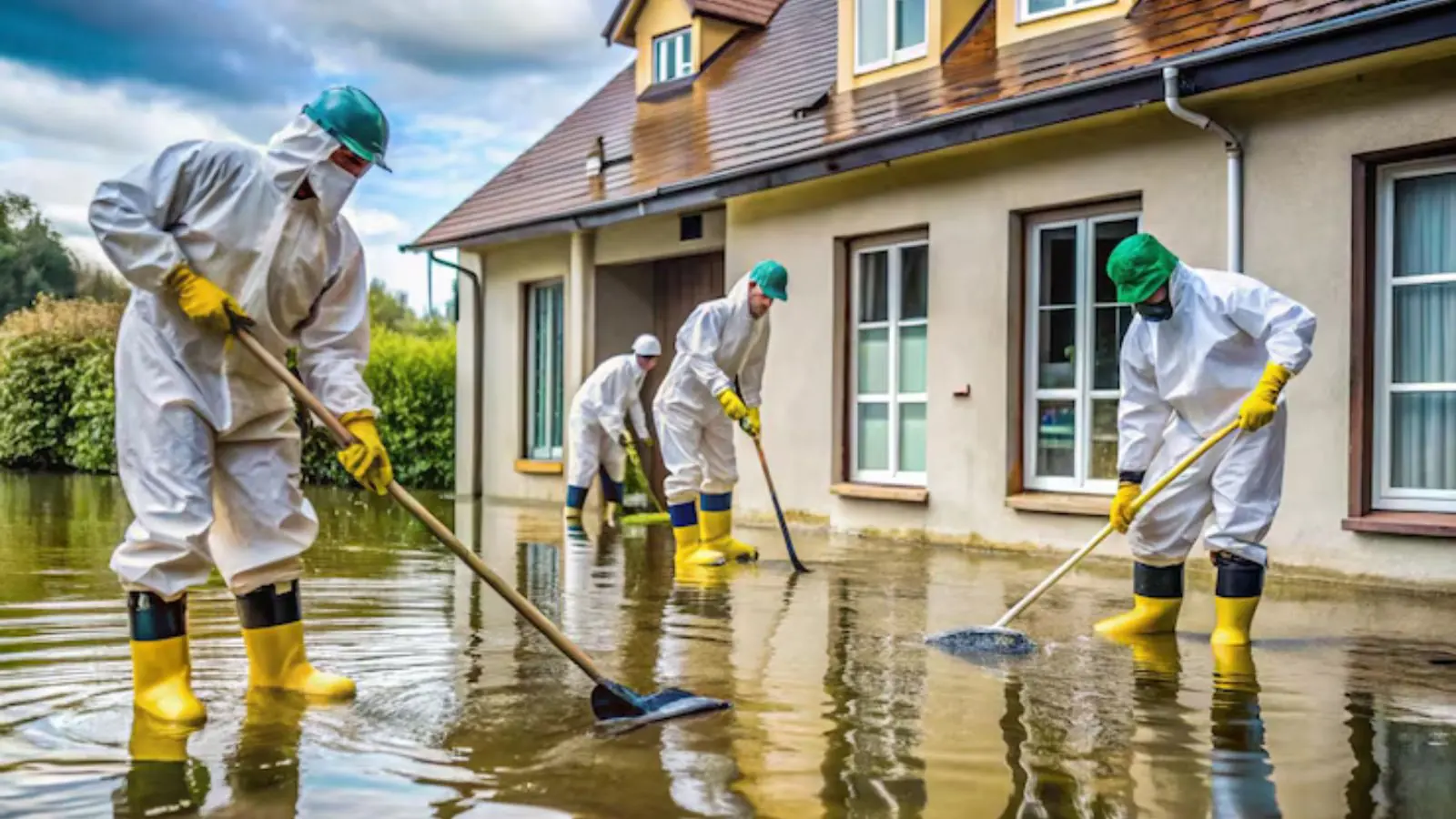
A toilet gurgles, a floor drain fills, and dirty water starts coming up where it should be going down. Sewage backup cleanup is not a mop-and-bucket job. The water is contaminated, and what it touches is treated differently from a clean pipe leak.
This post explains why the industry calls it Category 3, how to find out where the blockage is, what normally gets removed, what can sometimes be saved and what to check in your insurance. Start with the safety box below.
Safety first, before anything else
Sewage water can carry contamination that you should not touch, breathe near or track through the house. Treat the area as off-limits until trained crews have dealt with it. Health questions go to your physician.
- Do not wade through the water or walk it into clean rooms.
- Do not run a household vacuum or fans through contaminated water.
- Do not flush toilets or run the washing machine or dishwasher.
- Wash hands thoroughly if you have touched anything, and set aside clothing that got splashed.
Stay out of the affected area. Keep children and pets away. If water is near outlets, appliances or the panel, cut power only if the panel is dry and safe to reach, and call 911 or the utility for any electrical or gas risk before calling the restoration line. Do not use plumbing fixtures while the line is blocked.
Why sewage is Category 3
ANSI/IICRC S500, the published standard for water damage restoration, classifies water by contamination. Sewage falls into Category 3, the most contaminated level. Contact with porous materials like carpet, pad and drywall is treated seriously, since contamination soaks in.
Because of that, the rules for what can be saved are stricter than for a clean supply-line leak. A crew handling a flood damage restoration job with sewage will treat the work area as contaminated, control access and dispose of removed material properly.
Sewage Backup Cleanup Chatsworth, CA in Chatsworth? Call the 24/7 line.
☎ (818) 337-2642Find the blockage before the cleanup is finished
Cleanup does not help if the line is still blocked, because the backup will return. The question is where the stoppage is. If it is in the line on your property, a plumber can usually locate it with a camera and clear it.
In the City of Los Angeles, the city sewer system serves the street main, and the line running from your house to the main is generally the owner's responsibility. That split matters, so ask the city to confirm where the problem is before assuming it is yours or theirs. If several neighbors have the same trouble at once, report that too.
- Stop using water in the house, including showers and laundry.
- Call a plumber to inspect the line and find the blockage.
- Ask the city to confirm whether the stoppage is in the street main or your lateral line.
- Take photographs of the backup, the fixtures involved and any visible debris.
- Call the restoration team once the area is safe from electrical risk.
- Keep copies of plumber reports, city communications and receipts.
What gets removed and what can be saved
As a rule, porous materials that touched sewage are removed, while hard, non-porous surfaces can often be cleaned and disinfected. The table shows the general pattern. A crew makes the call material by material, and should tell you why.
| Material | General approach | Why |
|---|---|---|
| Carpet and pad | Removed and discarded | Absorb contamination and are hard to clean reliably |
| Drywall and insulation touched by water | Cut out and removed | Porous, and wicks water above the visible line |
| Baseboards and trim | Often removed, sometimes cleaned | Depends on material, paint and how long they were wet |
| Tile, sealed concrete, metal | Cleaned and disinfected | Non-porous surfaces can be treated |
| Solid wood furniture | Case by case | Sealed finish and construction decide |
| Upholstery, mattresses, paper | Usually discarded | Porous or hard to clean |
| Photographs, documents | Ask about specialty recovery | Some items can be dried or copied |
How the cleanup works
A crew starts by extracting standing water with extraction units, then removes contaminated materials in sealed bags. Surfaces are cleaned and treated with antimicrobial products. Moisture meters and thermal imaging cameras confirm that wall cavities and subfloors are dry before anything is rebuilt.
Air movers and LGR dehumidifiers dry what is kept, and HEPA air scrubbers may run during the work. Ask whether the crew works to S500 and how they will document readings. A water damage cleanup team should also tell you when it is safe to re-enter and when repairs can begin.
Documentation and insurance
The California Department of Insurance advises reporting damage immediately and photographing it. List damaged items with brand and model, keep a log of calls and do not discard damaged items until the adjuster says it is acceptable. Reasonable steps to protect the property are expected, and receipts matter.
Here is the part many owners miss. Sewer or drain backup coverage is often a separate endorsement on a homeowners policy, so check your policy or ask your insurer now. Standard policies generally do not cover flood, which needs its own policy. For structural damage, the CDI suggests getting written, line-by-line bids from licensed contractors.
Sewage backups in Chatsworth neighborhoods
Chatsworth is a neighborhood of the City of Los Angeles, which means the city sewer system is the one to ask about a street main problem. Keep the address handy, since ZIP 91311 is the standard ZIP and 91313 is for PO boxes only. Giving the city the street address, not a box number, helps them find the right location.
Rain falls mostly November through March, so that is the stretch to pay closer attention. Slow drains and gurgling toilets are early warnings, and calling a plumber then can head off a full backup. If you live in Canoga Park or Northridge, the same rule about main versus lateral applies, so ask the city to confirm where the problem is.
If the work involves cutting out walls or replacing fixtures, LADBS says projects must comply with local building codes. Permits are applied for through PermitLA or ePlanLA with an Angeleno account, so ask your contractor whether yours needs one.
Frequently asked questions
Can I clean up a small sewage backup myself?
It is not recommended. Sewage is Category 3 water, and porous materials it touched, such as carpet, pad and drywall, generally need to be removed. Cleaning surfaces without proper protection and disposal can spread contamination. Stay out, keep family and pets away, and call a professional crew. For health questions, see your physician.
Who is responsible for the sewer line, me or the city?
In the City of Los Angeles, the city sewer system serves the street main, and the line on your property is generally the owner's responsibility. Because a blockage can be on either side, ask the city to confirm where the problem is. A plumber can camera the line and give you a written report to share.
Does homeowners insurance cover a sewer backup?
It depends on your policy. Backup coverage is often a separate endorsement, and flood is usually excluded and needs a separate flood policy. Check your policy and ask your insurer. Document everything, keep receipts for reasonable protective steps and do not throw away damaged items until the adjuster says it is acceptable.
Can the carpet be cleaned instead of replaced?
For sewage, carpet and pad are generally removed and discarded. Hard surfaces like tile and sealed concrete can usually be cleaned and disinfected. The crew should explain each decision, show the moisture readings and tell you what was removed.
What is the right address to give when I report a Chatsworth sewer problem?
Use your street address in the 91311 ZIP code. The 91313 ZIP is for PO boxes only, so it will not locate a property. Also mention the cross street, which fixtures backed up and when it started. That helps the city and your plumber narrow down whether the problem is the street main or your lateral line.
Water on the floor right now? Call the 24/7 line.
☎ (818) 337-2642