
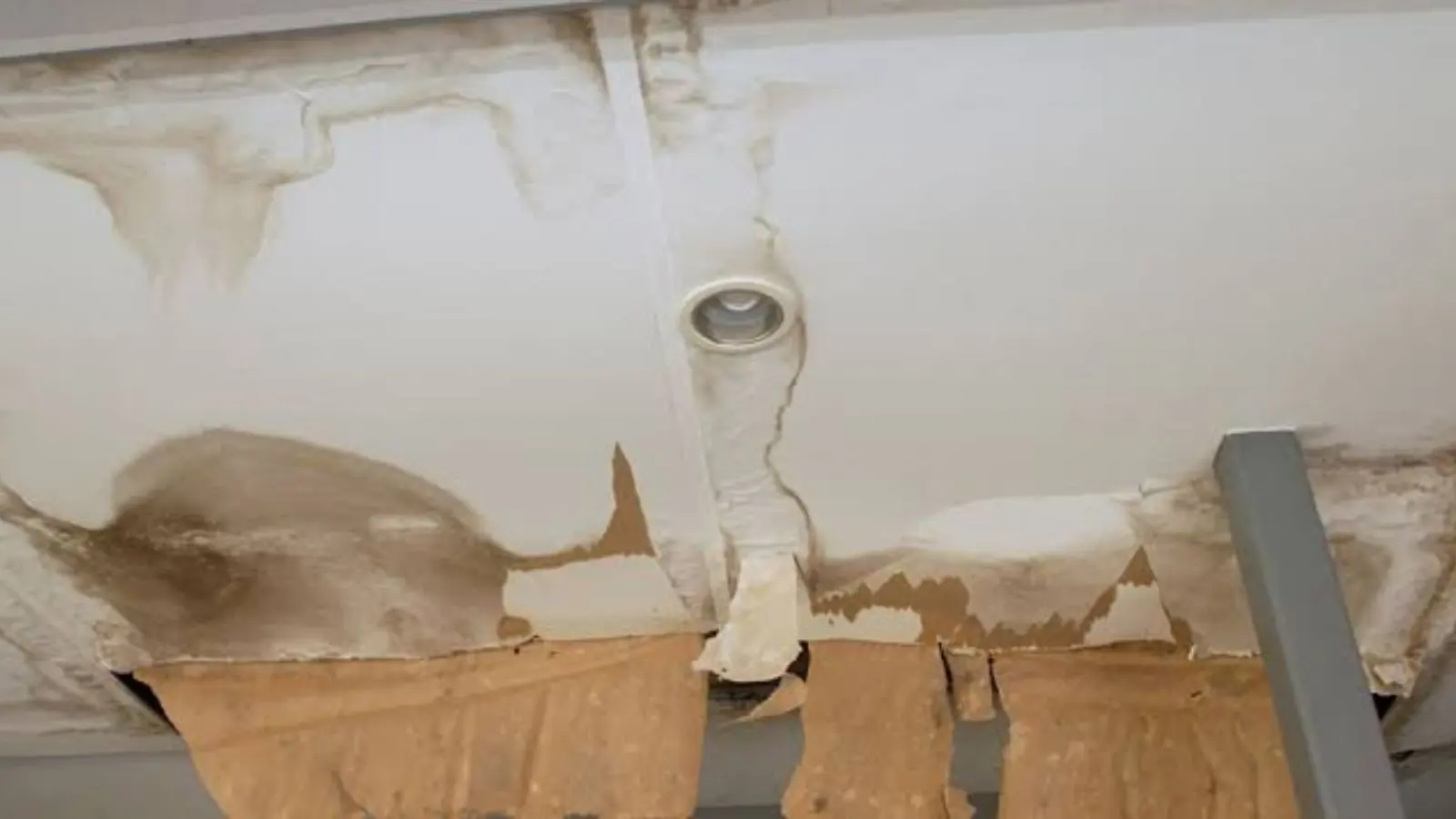
A brown ring spreads across the drywall. Then the paint bubbles, and one corner starts to sag like a hammock. A wet ceiling gives you a short window to act, and the choices you make in that window decide whether you are patching a spot or replacing a whole room of drywall.
This guide combines three questions people usually search separately: water damage ceiling repair, how to fix a water damaged ceiling, and ceiling water damage restoration. It follows the order a real job follows, which is safety first, then source, then drying, then repair and finish.
Safety first, because water and ceilings hide wiring
Ceilings carry light fixtures, fans, smoke detectors and wiring. Water that gathers above them can find its way into all of those. Treat a wet ceiling as an electrical question before it is a drywall question.
- Stay out from under a ceiling that is visibly sagging or dripping heavily.
- Turn off power to that room at the panel, but only if the panel is dry and safe to reach.
- If water is dripping from a light fixture or you smell burning, leave the area and call 911 or the utility.
- Move people, pets and furniture out of the room.
- Place buckets under steady drips and cover floors with plastic.
Never stand under a bulging ceiling or touch fixtures that are wet. If you are not sure the power is off, treat the room as live.
Roof leak or plumbing leak? How to tell
The stain tells a story if you read it right. Roof leaks show up during or just after rain, and often appear near exterior walls, chimneys, vents or skylights. Plumbing leaks show up with no rain at all, and often sit under a bathroom, kitchen or laundry on an upper floor.
Do not trust the stain location alone. Water travels along rafters and pipes before it drops, so the wet spot may be several feet from the real opening. A restoration crew uses a moisture meter and a thermal imaging camera to trace where the moisture really is.
| Clue | Points toward a roof leak | Points toward a plumbing leak |
|---|---|---|
| Timing | Appears during or after rain | Appears on dry days too |
| Location | Near exterior walls, vents, skylights | Under a bath, kitchen, laundry or water heater |
| Stain pattern | Brown rings that grow after storms | Steady spot that grows even when it is dry |
| Water bill | No change | May climb without explanation |
| Sound | Drips only in storms | Hissing or dripping in the wall at quiet times |
Water Damage Ceiling Repair Chatsworth, CA in Chatsworth? Call the 24/7 line.
☎ (818) 337-2642When to relieve a sagging ceiling, and how
A ceiling that bags downward is holding water, and the weight is more than the drywall can take. Releasing that water in a controlled way can keep the whole panel from falling. Only do this when you can stay clear of any light fixture or wiring, and the power is off.
Set a bucket directly below. Stand to the side, not under the bulge, and use a long screwdriver to poke a small hole at the lowest point of the sag. Let it drain, and expect more water than you think. If you are unsure about wiring above the spot, or the sag is large, call a professional instead.
- Do it only if power to the area is off and the panel was safe to reach.
- Use a small hole, not a large cut. A small hole drains and is easy to patch.
- Keep your head and body out of the drip line.
- Wear eye protection, since insulation and debris may fall with the water.
Dry the framing and insulation before any drywall work
Painting over a wet ceiling is the most common mistake. The stain returns, and the moisture stays behind the drywall where mold can start. Wet insulation often has to come out, since it holds water against the framing for a long time.
Professional drying uses air movers, LGR dehumidifiers and extraction units, with moisture meters to confirm progress. The scope for this stage is covered by water damage repair crews, who can open a section of the ceiling to dry the cavity and then rebuild it. If standing water is still on the floor below, the first call is for emergency water removal.
- Remove wet insulation and save a photo of it for your records.
- Cut back drywall until you reach dry, firm material.
- Run drying equipment until moisture readings match unaffected areas.
- Confirm the leak source is fixed before closing the ceiling.
Repair the drywall, then block the stain
Once the cavity is dry, replace damaged drywall rather than trying to patch over soft or crumbly sections. Cut back to the nearest joist, screw a new piece in place, tape the seams and apply joint compound in thin coats. Sand lightly between coats so the surface lies flat under the light.
Water stains bleed through ordinary paint. Use a stain-blocking primer on the repaired area and a wide margin around it, then paint the entire ceiling plane in one direction. Painting only the patch tends to leave a visible halo.
- Cut out damaged drywall to the center of the nearest joists.
- Fasten new drywall, tape seams and apply compound in thin coats.
- Sand, wipe off dust and apply a stain-blocking primer.
- Paint the whole ceiling for an even color.
- Watch the area during the next heavy rain or plumbing use.
Signs the job is bigger than a patch
Some ceilings need more than a cosmetic fix. A musty smell, dark growth, a ceiling that stays soft after drying, or repeated stains in the same place all point to hidden moisture. If leakage has been ongoing, mold may already be present, and the California Department of Insurance guide suggests contacting your adjuster and arranging professional testing and cleanup.
If mold is a concern, ask whether the crew follows ANSI/IICRC S520, the published standard for mold remediation. Keep in mind that no company can promise mold will never return, because mold needs moisture and moisture can come back.
Rain season and wind in Chatsworth, Porter Ranch and West Hills
Chatsworth has a Mediterranean climate, with rain mostly from November through March and nearly dry summers. Roofs get a long break, then take a hard hit in the first storms. In October, look over the roof from the ground or hire someone to inspect flashing, vents and loose tiles before the season starts.
Porter Ranch sits at 1,280 feet below the Santa Susana Mountains, and winds there have been clocked at 70 mph. Wind can lift shingles and drive rain sideways under edges where it does not normally go. After a windy storm, look at the ceilings in rooms along the roof's outer edge, and see the Porter Ranch service page for how local crews respond.
Parts of West Hills, such as Woodlake and Pinelake Estates, were subdivided in the 1960s, so some roofs and plumbing runs there have years on them. Bell Creek, a headwater creek of the Los Angeles River that starts in the Simi Hills, is a reminder that storm water moves downhill fast. Homeowners can start with the West Hills page, and should clear gutters and drains before the first big rain.
Frequently asked questions
Can I just paint over a water stain on my ceiling?
Not until the source is fixed and the ceiling is fully dry. Paint alone will not stop moisture, and stains usually bleed back through. Dry the area, repair or replace damaged drywall, use a stain-blocking primer, and then paint the whole ceiling.
Is a sagging ceiling an emergency?
Yes, treat it as one. A bulging ceiling holds water and may collapse. Stay out from under it, shut off power if the panel is dry and safe to reach, and call 911 or the utility if wiring is involved. Then call a restoration company about extraction and drying.
How do I know if the leak is from the roof?
Roof leaks usually show during or after rain and often appear near exterior walls, vents or chimneys. Plumbing leaks continue on dry days and often sit under bathrooms or kitchens. A moisture meter and thermal imaging camera help confirm where the water is coming from.
Does insurance cover ceiling water damage?
It depends on the policy and the cause. Sudden and accidental damage, like a burst pipe, is often covered. Gradual leaks and neglect often are not. Report damage immediately, take photos, keep receipts and ask your insurer what applies.
Why do Porter Ranch homes need extra attention after wind?
Winds in Porter Ranch have been clocked at 70 mph, and wind-driven rain can enter at roof edges, vents and flashing that stay dry in calmer storms. After a strong wind event, look for new stains on ceilings along exterior walls before the next rain.
Water on the floor right now? Call the 24/7 line.
☎ (818) 337-2642