
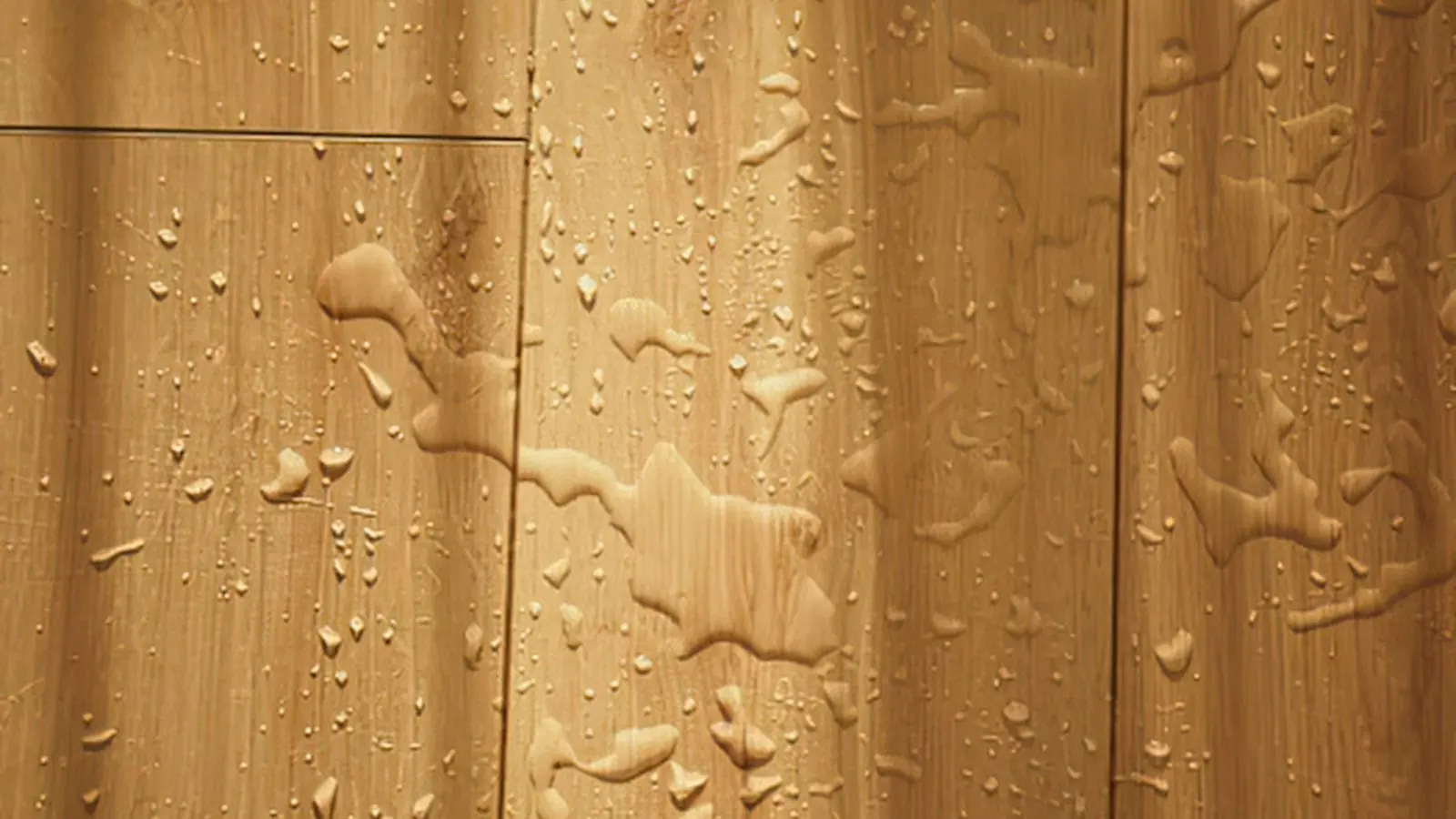
Wood and water have a complicated relationship. Boards swell as they soak up moisture, and they can shrink back when dried slowly and evenly. Sometimes the floor recovers. Sometimes the boards are too far gone, or the water went somewhere you cannot see.
If you are dealing with water damaged hardwood floors in a Chatsworth home, this guide covers what to check first, how to read the warning signs, and how restoration crews decide between drying and replacing. The honest truth is that no one can judge your floor from a photo, so use this as a checklist for the conversation with a professional.
The first things to do on a wet wood floor
Speed matters more than anything else with wood. The longer boards stay wet, the more they swell, stain and loosen from what they are fastened to. Start with the source, then move to the surface.
- Stop the water source. Close the valve, or if rain is coming in, cover the opening with plastic.
- Check for electrical risk. If water is near outlets or the panel, stay out, and call 911 or the utility for electrical concerns.
- Mop or soak up standing water with towels. Do not use a household vacuum on a wet floor.
- Lift rugs, furniture and anything that traps moisture against the wood.
- Open interior doors for air circulation, but do not blast heat on the boards. Fast heat can crack and warp them.
- Take photos and note the time the leak started, since this helps with any claim.
If the water was sewage or came from a backed-up drain, treat it as contaminated. Keep children and pets out, and let professionals handle the removal.
Ask what the floor sits on
Hardwood is only half the story. The other half is what is underneath it. Solid planks nailed to a wood subfloor over a crawl space behave very differently from engineered boards glued to a concrete slab.
Water can travel sideways under a floor, and it can get trapped between the finish and the subfloor. A surface that looks fine can still hold moisture below. That is why crews check with moisture meters and thermal imaging cameras rather than trusting what they can see.
- Solid hardwood over wood subfloor: can often dry from both sides if a crawl space is open.
- Engineered hardwood: layers can separate and edges can curl, and the glue line may fail.
- Hardwood over a concrete slab: moisture can sit under the boards for a long time.
- Floating floors: water can run under the whole assembly, not just the wet spot.
Water Damaged Hardwood Floors Chatsworth, CA in Chatsworth? Call the 24/7 line.
☎ (818) 337-2642Cupping, crowning and buckling, explained
Cupping means the edges of each board rise higher than the center, so the surface looks like a series of shallow troughs. It usually points to moisture coming from below, or more moisture on the bottom of the board than the top. Many cupped floors flatten as they dry, though a sanding and refinishing job may still be needed.
Crowning is the opposite, with the center higher than the edges. It sometimes shows up after a cupped floor was sanded before it was fully dry. Buckling is the most serious. Boards lift away from the subfloor, sometimes in a visible ridge, and that usually means the floor has lost its fastening and needs a professional decision.
- Cupping: edges up, center down. Often recoverable if caught early.
- Crowning: center up. Often a sign of sanding too soon.
- Buckling: boards lifting off the subfloor. Often leads to replacement of the affected area.
- Gaps: boards shrinking after drying. May be normal or may signal over-drying.
Dry it or replace it? A decision table
No table can decide for you, but this one shows how restoration crews tend to think. The notes below the rows are about what they measure, not a promise about your floor.
| What you see | What it may mean | Likely path |
|---|---|---|
| Damp surface, no lifting, caught early | Water has not soaked deep | Drying with air movers and dehumidifiers, then monitor |
| Mild cupping, boards still tight | Moisture from below | Controlled drying with drying mats, then reassess before sanding |
| Heavy cupping, gaps, dark staining | Longer exposure or contamination | Sample areas, test moisture, likely partial replacement |
| Buckling or boards lifting | Fasteners or glue have failed | Remove affected boards and dry the subfloor |
| Black or green growth on the underside | Moisture has been present for a while | Stop and bring in professional mold testing |
| Sewage or category 3 water | Contaminated | Removal and disposal of affected flooring |
Never sand or refinish a floor until moisture readings show the wood and subfloor are back to a normal range for your home.
What professional drying actually involves
Hardwood drying is slow on purpose. A crew starts with moisture meters to map what is wet. Thermal imaging cameras help find hidden pockets. Then comes controlled airflow and LGR dehumidifiers that pull water out of the air so the wood can release its moisture gradually.
Some crews use drying mats, which pull moisture from the floor surface through suction. They are a good fit for certain boards and a poor fit for others, so ask why a mat is being proposed for your floor. Our water mitigation service page explains the equipment, and crews follow ANSI/IICRC S500 as the published standard, which you can ask any company about.
- Daily moisture readings at marked spots, written down.
- Equipment placed to cover the whole room, not only the wet corner.
- A stated plan for when drying is finished, based on readings.
When replacement is the safer call
Replacement is often the right decision when boards have buckled, when sewage was involved, or when mold is on the underside. It is also sensible when the cost and time of a long drying effort outweigh the value of the old boards. A floor that is dried and left with permanent gaps may disappoint everyone.
Matching is the hard part. New boards rarely match the color of old, sun-aged wood on day one. A plan that includes sanding and refinishing an entire room often gives a better result than patching. Once the dry-out is done, water damage repair crews can scope the rebuild so the subfloor, boards and finish are all dealt with.
Hardwood in Northridge, Winnetka and Chatsworth homes
Postwar tract housing for veterans' families shaped much of Northridge, and older homes there may have older plank floors. If your house dates from that period, ask a flooring pro what kind of subfloor you have, because that answer can decide how much of the floor can be dried. The Northridge page has more detail on how crews approach older houses.
Winnetka was founded in 1922 as a poultry colony, so homes there span many decades of building. In any house that has been remodeled, an added layer or a patched subfloor can hide under the visible boards. Ask for moisture readings at several spots before you trust a surface, and read more on the Winnetka location page.
In Chatsworth itself, rain falls mostly from November through March and summers are nearly dry. Winter storms can push water under doors and through foundation gaps, and a dry summer can leave you assuming everything is fine. Check thresholds and door sills before the rains and photograph the floor in good condition.
Frequently asked questions
Can water damaged hardwood floors be saved?
Sometimes. If water is removed quickly and the boards are dried with controlled airflow and dehumidification, mildly cupped floors can flatten out. Buckled boards, sewage contamination or mold underneath usually point toward replacement. A professional with moisture meters can assess how deep the water went.
How long does hardwood take to dry?
It varies with the wood, the subfloor, the amount of water and the weather. Hardwood is usually dried slowly, over days rather than hours, with daily moisture readings to confirm progress. Ask any crew how they will decide when drying is complete.
Should I sand a floor once it feels dry?
Wait. Surface feel can be misleading, and sanding a floor that still holds moisture can lock in crowning and gaps. Ask for moisture readings that show the boards and subfloor have returned to a normal range before sanding or refinishing.
Do I need to remove baseboards?
Often yes. Pulling baseboards or drilling small relief holes behind them lets air reach the wall cavity and the floor edge, where water likes to hide. Crews usually plan to reinstall or replace the trim afterward.
My Northridge house is older. Does that change anything?
It can. Older solid plank floors over a wood subfloor can sometimes be dried from both sides if the crawl space is accessible. Remodels may have added layers over the original floor, so ask the crew to test several spots rather than one.
Water on the floor right now? Call the 24/7 line.
☎ (818) 337-2642