
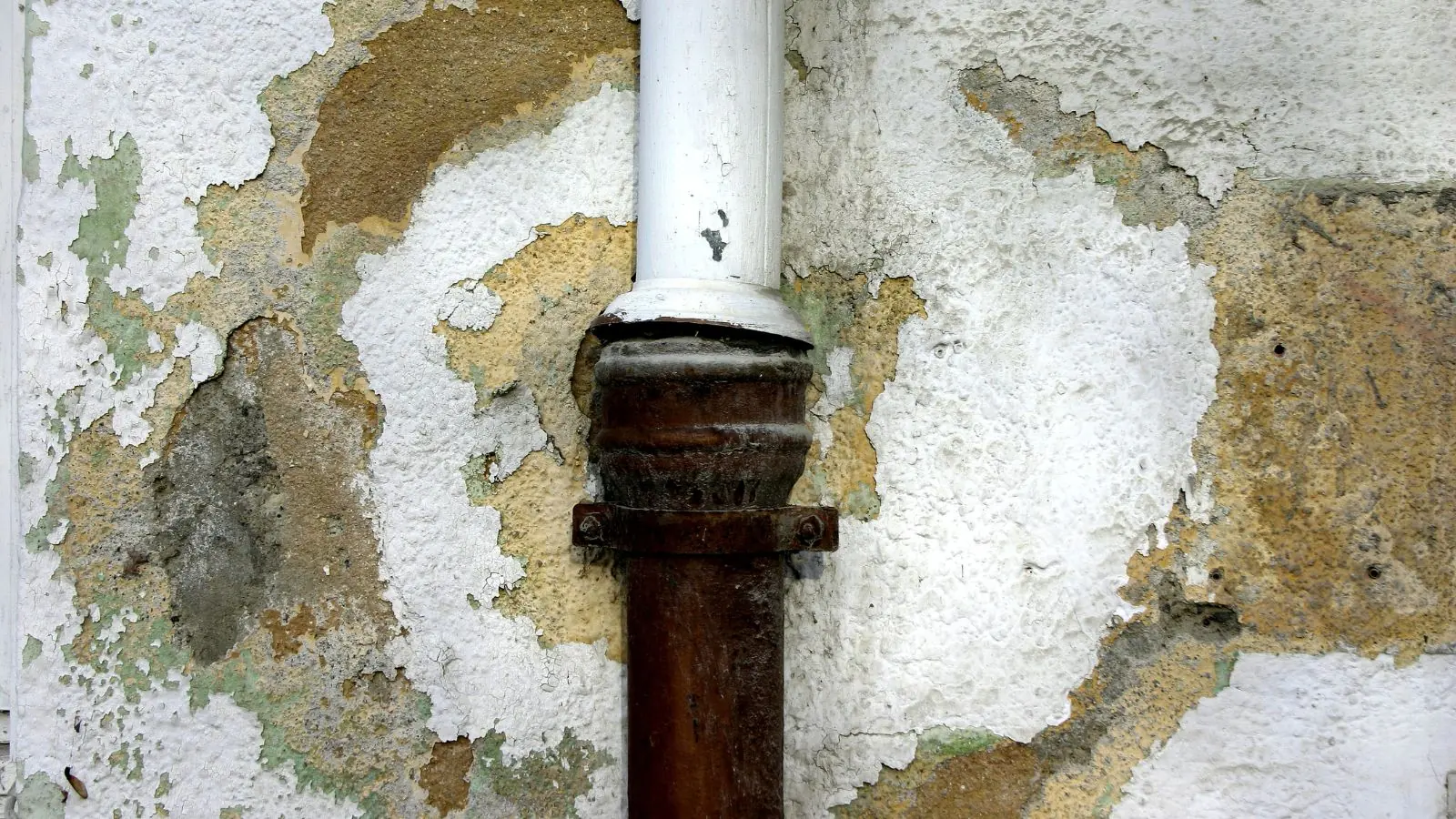
Water damaged walls rarely announce themselves with a puddle. A faint stain, a soft spot near the baseboard or a patch of paint that looks like it has the measles is often the first clue. By then the wet side of the wall may be larger than the stain suggests.
This guide covers the signs that matter, how different wall materials behave, and the tools used to see inside a wall without tearing it open. It ends with a cut-out decision table you can use before you talk to a contractor.
Signs a wall is holding water
Walls hide moisture well. Start with your eyes and hands, then move to tools if anything looks off.
Compare the suspect area with a wall in a dry room. Differences in color, texture and temperature matter more than any single sign.
Press gently with a flat palm rather than a fingernail. A wall that gives under light pressure has likely lost strength inside, even if the paint still looks intact.
- Paint that bubbles, blisters or peels in a patch.
- Brown, yellow or gray stains that spread or return after drying.
- Drywall that feels soft, crumbly or cool to the touch.
- Baseboards that swell, lift or separate from the wall.
- A musty smell that gets stronger when the room is closed up.
- Wallpaper seams that curl or bubble.
If a wet wall is near outlets, switches or a panel, stay away from it. Cut power only if the panel is dry and safe to reach. For electrical or gas risk, call 911 or the utility before calling a restoration company.
What the wall is made of changes everything
Drywall has a paper face and a gypsum core. Both soak up water quickly, and once the core softens it rarely regains strength. Plaster over lath behaves differently. It is denser and can sometimes dry in place, but it can also crack, loosen or separate from the lath behind it.
Ask when your house was built, and ask a contractor to identify what is behind the paint. Older homes in the west Valley can mix plaster, patched drywall and later additions in the same room. Knowing which one you have prevents a wrong guess about drying.
Water Damaged Walls in Chatsworth? Call the 24/7 line.
☎ (818) 337-2642What is behind the surface: insulation, framing and trim
Insulation is the part most homeowners forget. Fiberglass batts that get wet can hold water against the framing and drywall. Once soaked and compressed, they often need to be removed because they dry slowly and lose their shape.
Wood studs and plates can usually be dried, but they need to be measured, not assumed. Baseboards and trim wick water upward and sideways, so a small floor spill can still stain a wall higher than you expect. Our water damage repair page explains how replaced trim is matched to what stays.
How crews look inside a wall
Moisture meters read dampness in the wall surface and, with pins, deeper in the material. Thermal imaging cameras show temperature differences that often point to wet areas behind paint. Neither tool gives a verdict alone. A trained operator compares readings, checks a dry reference wall, and decides where small inspection holes are needed.
Readings guide the plan from the first visit through the last. Standards such as ANSI/IICRC S500 describe how water damage is assessed and dried, and you can ask any company whether its crews work to it.
- Locate and stop the water source first.
- Map moisture across the room, including adjacent walls and ceilings.
- Confirm with meter readings at several heights.
- Open small inspection holes if readings and imaging disagree.
- Decide dry in place or cut out, then record the reasons.
Dry in place or cut it out: a decision table
Use this table as a starting point for the conversation with your contractor. The final call depends on readings, materials and the type of water.
Cutting is not a failure of drying. Removing a section lets air reach the cavity, shows what the water touched and gives you a clean edge for repair. A small, planned opening usually costs less in rebuild effort than a hidden problem found later.
| Condition | Likely approach | Why |
|---|---|---|
| Clean water, caught fast, wall firm | Dry in place | Materials may recover with air movers and dehumidifiers |
| Drywall soft, crumbly or sagging | Cut out and replace | The gypsum core has lost strength |
| Wet batt insulation inside the cavity | Remove insulation, dry framing | Wet insulation holds moisture against wood and drywall |
| Plaster stained but solid | Monitor, dry in place if possible | Dense material, but check for loose sections |
| Sewage or storm water contact | Cut out and replace affected materials | Contaminated materials are not kept |
| Paint bubbling with repeat staining | Investigate for a hidden source | A recurring stain points to ongoing moisture |
Never paint over a stain to hide it. Paint can seal moisture in and make the problem harder to find later.
What to do before help arrives
You can limit damage while you wait. Stop the water, move furniture away from the wall and pull any rugs off the wet floor. Run fans and open windows if the weather allows.
Photograph the wall from several distances before anything is touched. Those pictures document the starting condition for your insurer and give the crew a reference. Our water mitigation page shows how the first visit is organized.
- Do not poke or scrape wet drywall, because it breaks apart.
- Do not close the room up and hope it dries.
- Keep wet insulation and trim until the adjuster approves discarding them.
- Note when you first saw the stain and any storm that came before it.
Chatsworth homes, ages and the rainy months
Chatsworth's name first appeared on a subdivision map in 1888, with a townsite plat following in 1893. Neighboring Canoga Park began as Owensmouth, founded in 1912, so the west Valley contains housing from several eras. Ask about the age of your home and its wall materials, because that answer tells you whether to expect plaster, drywall or a mix.
Rain falls mostly from November through March, and summers are nearly dry. Check exterior walls, window corners and ceilings after the first storms of the season. A stain that shows up only after rain points to an envelope leak rather than a plumbing one.
Crews serve Canoga Park and Porter Ranch as well, where home ages and wall types vary just as widely. Tell the crew what you know about your build date.
Frequently asked questions
Can water damaged drywall be saved?
Sometimes, when the water is clean, the wall is still firm and drying starts quickly. Soft, crumbly or sagging drywall usually needs replacement. Moisture meters and thermal imaging help a crew decide, so ask to see the readings before and after drying.
Why is my paint bubbling but the wall looks dry?
Bubbling often means moisture is pushing outward from behind the paint. The source may be a slow plumbing leak, a roof or window leak, or vapor passing through the wall. A moisture check is the way to tell, because the surface can look fine while the inside is wet.
Should I remove wet insulation myself?
Wet insulation can sit inside a closed cavity, and opening walls without a plan can spread damage. If the water was clean and the area is small, ask a professional to confirm moisture first. Sewage contact means stay out and call for help.
Does an older home dry differently?
It can. Plaster behaves differently from drywall, and older homes may combine materials from several renovations. Tell the crew what you know about your home's age and past repairs so readings are interpreted correctly.
Why do Chatsworth walls sometimes stain only after rain?
Rain falls mostly from November through March here, so a stain that appears after storms usually traces to the roof, windows, flashing or exterior wall. A plumbing leak tends to show up regardless of weather. Photograph the stain after each storm and share the dates with your contractor.
Water on the floor right now? Call the 24/7 line.
☎ (818) 337-2642