
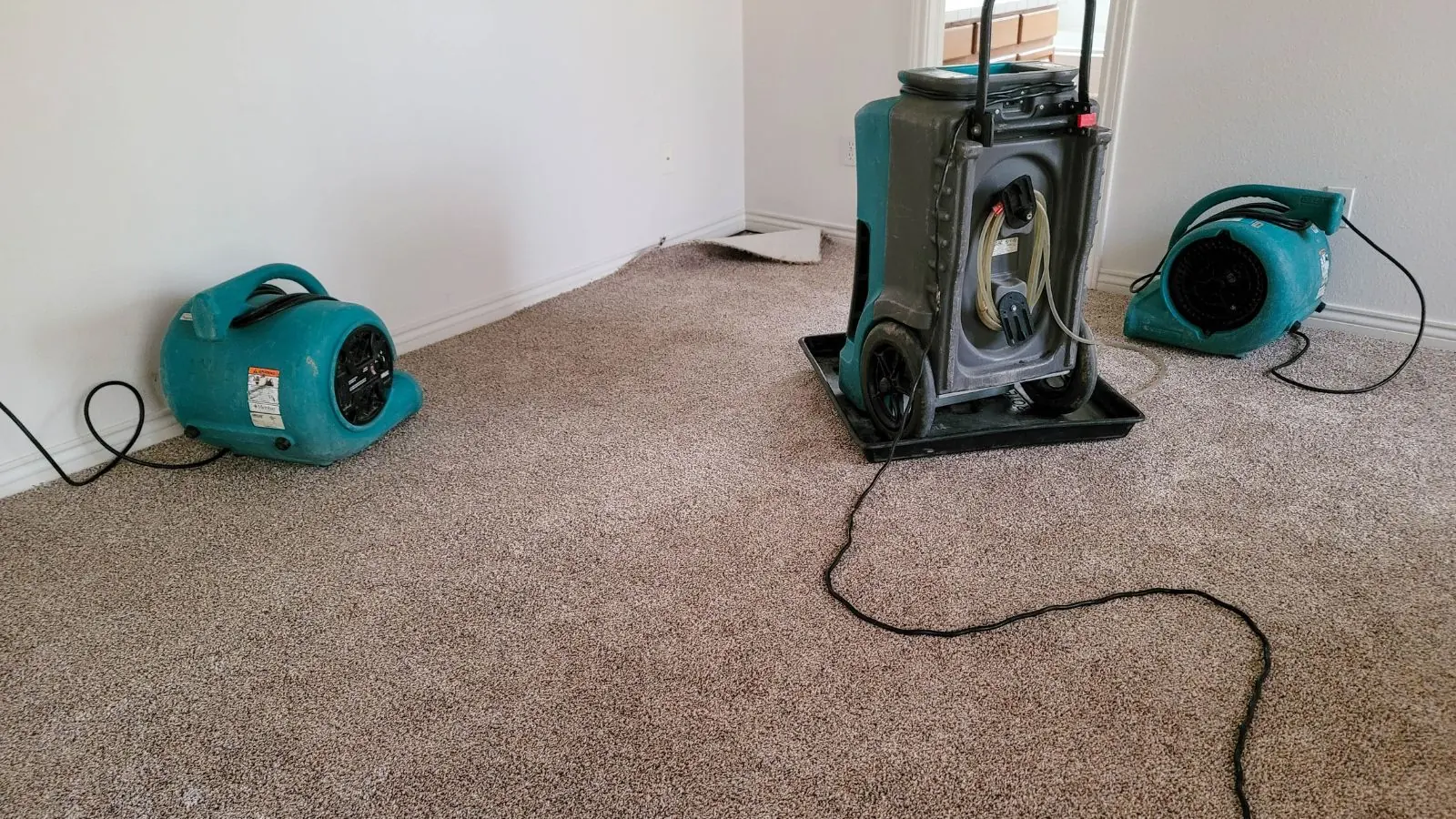
Wet carpet after a leak is one of the most common calls a restoration crew gets, and the question is always the same. Can it be dried, or does it have to go? The honest answer is that it depends on what kind of water soaked it and what is sitting underneath.
This guide gives you a decision table you can use on your own floor, explains why the pad matters more than the carpet, and lists what drying equipment actually does. If the water is still coming in, deal with that first.
Start with the water category
The industry standard for water damage restoration, ANSI/IICRC S500, sorts water into three categories by how contaminated it is. That category is the biggest factor in the dry-or-replace decision, and it can worsen as water sits and picks up contamination from the materials it touches.
| Category | Typical source | Carpet and pad decision |
|---|---|---|
| Category 1, clean | Broken supply line, tub overflow with clean water, appliance supply failure | Carpet can often be dried in place if acted on quickly. Pad is frequently dried or replaced depending on condition. |
| Category 2, gray | Washing machine or dishwasher discharge, toilet overflow with urine only, sump overflow | Carpet may sometimes be cleaned and dried. Pad is usually removed and replaced. |
| Category 3, black | Sewage, rising flood water, long-standing standing water | Carpet and pad are generally removed and discarded. |
If you suspect sewage or water that came in from outside, stay out of the area. Keep children and pets away, and call a professional. Do not run a household vacuum on wet carpet, as it is an electrical risk.
Carpet and pad are two different materials
Synthetic carpet fibers do not absorb much water. The pad underneath acts like a sponge and the backing holds moisture against the subfloor. This is why a carpet can look dry on top while the layer below stays wet for days.
Many crews lift the carpet, remove the pad if it is wet or contaminated, and dry the subfloor before reinstalling the carpet over a new pad. That method, called floating or lifting the carpet, lets air reach the underside. Without it, drying from the top alone can leave moisture trapped.
Wet Carpet After a Leak: Dry or Replace Chatsworth, CA in Chatsworth? Call the 24/7 line.
☎ (818) 337-2642What drying actually involves
Professional drying is a controlled process, not just fans. Each tool has a job, and crews adjust placement as readings change.
- Extraction units pull standing and absorbed water out of carpet and pad, which removes far more than airflow can.
- Air movers push dry air across the surface and underside to speed evaporation.
- LGR dehumidifiers pull moisture out of the air so the wet materials can keep releasing it.
- Moisture meters give numbers for carpet, pad, subfloor and baseboard, so the crew knows what is dry.
- Thermal imaging cameras help find wet spots behind baseboards and under flooring.
- Antimicrobial treatment may be applied where the situation calls for it.
How fast matters, in general terms
Time works against wet materials. The longer carpet and pad stay wet, the more chance of odors, staining and mold. Clean water can turn into a worse category when it sits, and the standard recognizes that.
There is no fixed number of hours that applies to every house, so be cautious of anyone who offers one. What you can say is that starting extraction and drying sooner gives you more options, and waiting narrows them. A call to emergency water removal is the right move when carpet is soaked and you cannot get ahead of it with towels.
Your own checklist before the crew arrives
- Stop the water source. Shut the valve, turn off the appliance or have the plumber isolate the line.
- Identify the source in plain words. Was it a clean supply line, a washer hose, a toilet, a drain, outside water or sewage?
- If the panel is dry and safe to reach, switch off power to the wet area. If not, call 911 or the utility for any electrical risk.
- Remove small items, furniture legs that touch carpet and anything that can stain it. Place foil or plastic under furniture legs.
- Photograph the floor, the source and the damaged contents, then list items with brand and model.
- Open windows and run the HVAC fan if the air is dry and the water is clean. Skip this for sewage or outside water.
When replacing is the right call
Replacement makes sense when the water was Category 3, when the carpet has delaminated or separated from its backing, or when the pad has soaked through and cannot be dried reliably. Carpet that smells strongly after drying, or shows growth, is another reason to replace.
There is also a practical side. A carpet that cannot be dried properly can cause a second round of repairs later, so a decision to remove it can reduce the total work. Your water damage cleanup provider should explain which materials were removed, what readings led to each decision and what was kept.
Insurance and renters
The California Department of Insurance advises reporting damage right away, keeping receipts for reasonable temporary protection and not discarding damaged items until the adjuster says it is acceptable. Check your policy, because sudden and accidental damage is often covered while flood damage generally needs a separate flood policy.
Renters should tell the landlord or property manager right away, because the flooring usually belongs to the owner. Ask who is arranging the drying, keep your own photographs, and check your renters policy for your belongings.
Wet carpet in Chatsworth and nearby neighborhoods
Chatsworth gets most of its rain from November through March, and summers are nearly dry. Wet carpet in winter often comes from roof leaks, window seals and water arriving at a door, while summer wet carpet usually points to plumbing, appliances or an air conditioner drain. Matching the season to the likely source helps you decide which category you are dealing with.
In Winnetka, renters held 42 percent of housing in the 2010 Census, so many wet-carpet calls there involve a landlord. If you rent, report the leak in writing and keep a copy. Homeowners in Porter Ranch, where the Santa Susana Mountains rise to the north, should also check ground-level doors and slab edges after a heavy storm.
Frequently asked questions
Can carpet be saved after a clean water leak?
Often yes, if the water was clean and drying begins quickly. The crew extracts water, lifts the carpet if needed, and dries the pad and subfloor with air movers and dehumidifiers. The pad may be replaced even when the carpet is kept. Moisture readings, not appearance, tell you when the job is done.
Why do crews remove the pad but keep the carpet?
Pad holds water and can be hard to dry thoroughly,. Removing it lets the subfloor dry and the carpet be reinstalled over new pad. Ask the crew to show readings on both the carpet and the subfloor.
What if the water came from a toilet overflow?
Treat it as contaminated until a professional says otherwise. Stay out, keep pets and children away, and let a crew assess. Overflow that includes sewage is Category 3, and carpet and pad are generally removed. Ask the crew which category it assigned and why.
I rent. Who decides whether to replace the carpet?
Usually the landlord or property manager, because the flooring is part of the building. Tell them right away in writing, share your photographs and ask who has arranged the drying. Check your renters policy for your own belongings, and keep a log of calls and messages.
Why might carpet in a Chatsworth home stay damp after a winter storm?
Rain falls mostly November through March, and water can enter at a door threshold, a window or a roof and soak the carpet edge first. Cool, humid winter air also slows evaporation. If the carpet feels damp a day later, call for a moisture check rather than waiting for sunnier weather.
Water on the floor right now? Call the 24/7 line.
☎ (818) 337-2642