
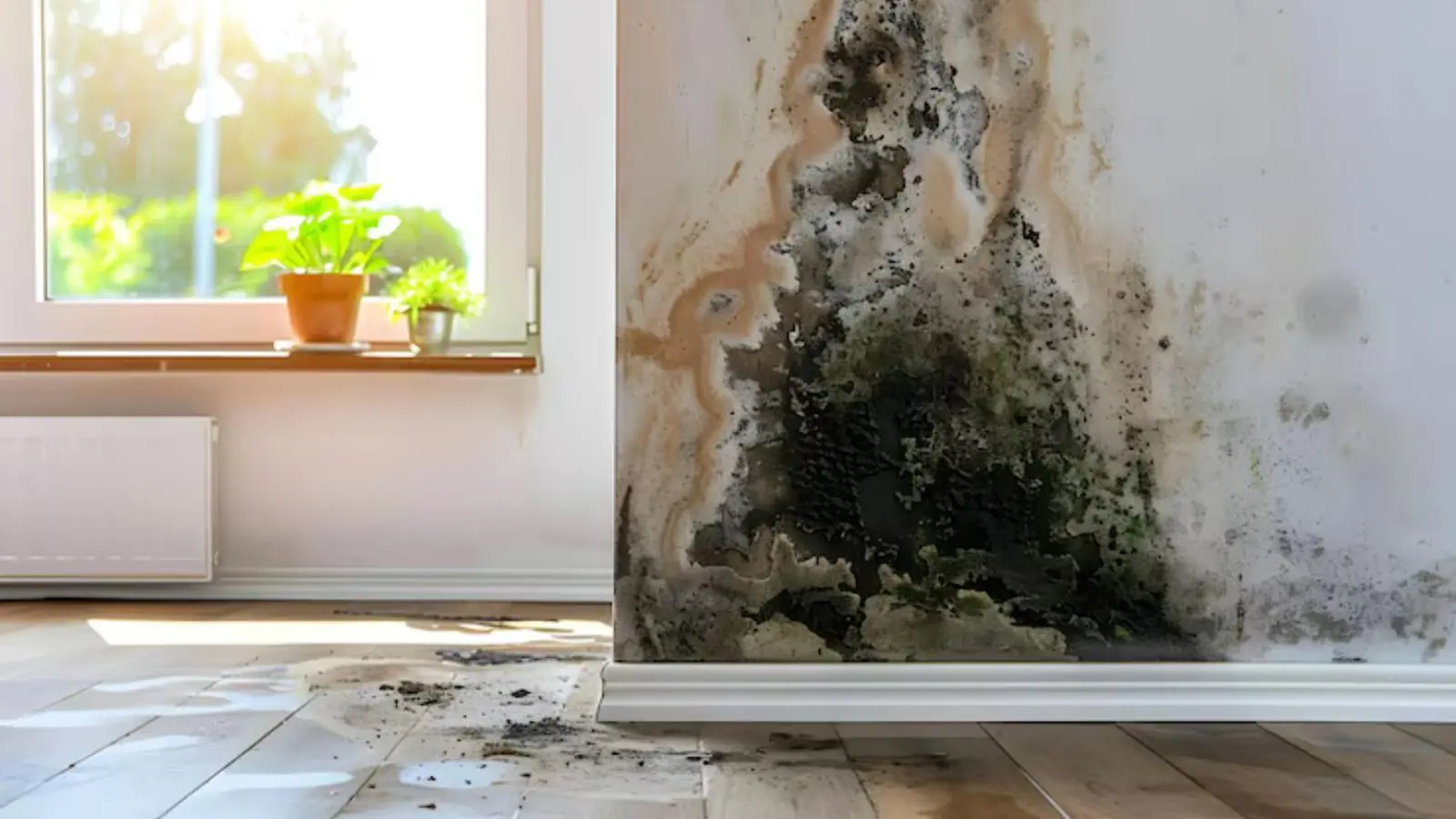
Mold is a type of fungus that grows when spores land on a damp surface and stay there. Spores are present almost everywhere, indoors and out. What turns them into a visible problem is moisture that does not go away.
That one idea guides every sensible decision about mold in a Chatsworth home. Find the water, fix it, dry the area, then deal with the growth. This guide explains the basics in plain terms and flags the points where a professional should take over.
What mold needs to grow
Mold needs three things: spores, a food source and moisture. Spores are always around. Food is easy to find, since drywall paper, wood, carpet, ceiling tile and dust all qualify. Moisture is the only one of the three that a homeowner can realistically control.
This is why the standard advice is to dry first. A cleaned surface that stays damp invites growth again, and no product removes the need to fix the water source.
What mold looks and smells like
Mold appears in spots or patches that can be black, green, white, gray or orange. Texture ranges from fuzzy to powdery to slimy. A musty or earthy odor in a closed room is a common clue, even before anything is visible.
Not every dark mark is mold. Soot, dirt, mineral stains and old water rings can look similar. If you are unsure, treat the stain as a moisture question first and ask a professional to assess it.
Take a photo with a coin or ruler beside the spot for scale. A dated picture shows whether it is growing and gives a professional a useful starting point.
- Spotting on ceilings above bathrooms or near roof penetrations.
- Discoloration along baseboards or at the bottom of exterior walls.
- Fuzzy growth on the back of furniture placed against a cool wall.
- Musty odor that returns after cleaning and airing out.
- Peeling paint, bubbling wallpaper or warped trim near a known leak.
What Is Mold in Chatsworth? Call the 24/7 line.
☎ (818) 337-2642Where moisture hides in a house
Visible leaks are the easy ones. The harder cases are slow, concealed sources that sit behind finishes for weeks. A homeowner can check many of these with a flashlight and a few minutes.
| Place | Typical moisture source | What to look for |
|---|---|---|
| Under sinks and behind toilets | Supply line or drain seep | Swollen cabinet floor, stains, damp smell |
| Bathroom ceilings and walls | Steam with weak ventilation | Spotting that returns after cleaning |
| Around windows | Condensation or failed seals | Water marks on sills, peeling paint |
| Attic and roof edges | Roof or flashing leak | Dark staining on rafters or ceilings |
| Slab edges and lower walls | Plumbing leak or water moving from outside | Cool, damp baseboards, buckled flooring |
| Behind appliances | Ice maker or washer lines | Moisture on the floor behind or beneath |
How mold and water damage are linked
Any water loss that stays wet can support growth, which is why the first days after a leak matter. Fast extraction and drying with air movers and LGR dehumidifiers is the most direct way to limit the risk. Our water damage cleanup service is built around that sequence.
A slow leak is different. Because the moisture has been present a long time, growth may already exist when the leak is discovered. In that case, drying alone is not the whole job, and the affected area needs assessment.
Testing, remediation and the S520 standard
Testing can help confirm what is present and where, but it is only one tool. The decision to remediate usually rests on what a trained person sees, what moisture readings show and what the moisture source was. Ask any company whether its crews follow ANSI/IICRC S520, the published standard for mold remediation.
Professional mold remediation typically involves containment of the work area, controlled removal of affected materials, HEPA air scrubbers and HEPA vacuuming, and a plan for the moisture source. No company can promise that mold will never return, and you should be cautious of anyone who does.
- Stop the water source and begin drying.
- Have the area assessed by a trained person with moisture tools.
- Contain the work area so dust and spores do not spread.
- Remove affected materials and clean surfaces to the standard.
- Verify the area is dry before rebuilding.
Common myths worth dropping
Many households lose time to beliefs that sound reasonable. A few of the most common ones are listed here, with the practical answer beside each.
The theme is the same each time. Mold is a moisture problem, so the plan always starts with the water.
- Myth: black mold is the only kind that matters. Reality: color does not tell you how a situation should be handled.
- Myth: a dehumidifier alone fixes it. Reality: it helps drying but does not remove growth already on materials.
- Myth: painting over it seals it. Reality: paint over damp growth peels and hides the problem.
- Myth: a clean test result means the wall is dry. Reality: moisture readings answer that question, not a single sample.
When to call a professional
Call for help when growth covers a larger area, returns after cleaning, sits behind walls or flooring, or follows sewage or storm water. A musty smell with no visible source is also worth a call. Those situations call for tools and containment that household cleaning cannot supply.
Questions about how mold affects anyone's health belong with a physician. A restoration company can assess a building, not a person.
If the damp area is near outlets, panels or appliances, stay out. Cut power only if the panel is dry and safe to reach, and call 911 or the utility for electrical or gas risk first. Sewage means stay out and call for help.
Chatsworth weather, rain months and mold
Chatsworth has a Mediterranean climate, with rain falling mostly from November through March and nearly dry summers. Roof leaks, window leaks and blocked drains tend to show up in the wet months, while air conditioning condensation and plumbing seeps can occur any time. Inspect your attic, window corners and ceilings after the first storms, and fix small leaks before the season gets going.
Renters should know their options as well. In the 2010 Census, renters held 42% of housing in nearby Winnetka, so many Valley households are not the owner. If you rent, report leaks and damp spots to your landlord in writing and keep copies, since a dated record is your best protection.
Crews cover West Hills and Winnetka along with Chatsworth. Wherever you live, the dry-first rule applies.
Frequently asked questions
Is all mold dangerous?
Mold comes in many types, and a restoration company cannot tell you how it affects any person. Health questions belong with a physician. What a professional can do is assess the building, find the moisture and decide what needs to be removed or cleaned to the S520 standard.
Can I just spray bleach on mold?
Surface cleaning may remove stains but does not address the moisture that fed the growth. On porous materials such as drywall or carpet, growth can reach below the surface. Fix the water source first, and call a professional for larger or hidden areas.
How fast can mold start after a leak?
It depends on temperature, materials and how long things stay wet, and no single timeline applies to every home. The practical rule is to dry wet materials as quickly as possible. If the leak ran for a long time before you found it, assume growth may already be present.
Should I test my home for mold?
Testing is one tool, not a requirement. A trained assessor looks at moisture readings, visible growth and the history of the building. Ask what the test would change about the plan before paying for one.
Does the dry Chatsworth summer protect my house from mold?
Dry outdoor air helps, but mold depends on moisture inside the building. A hidden plumbing leak, a bathroom with weak ventilation or a roof leak from last winter can keep materials damp year round. Check those spots in summer as well.
Water on the floor right now? Call the 24/7 line.
☎ (818) 337-2642